
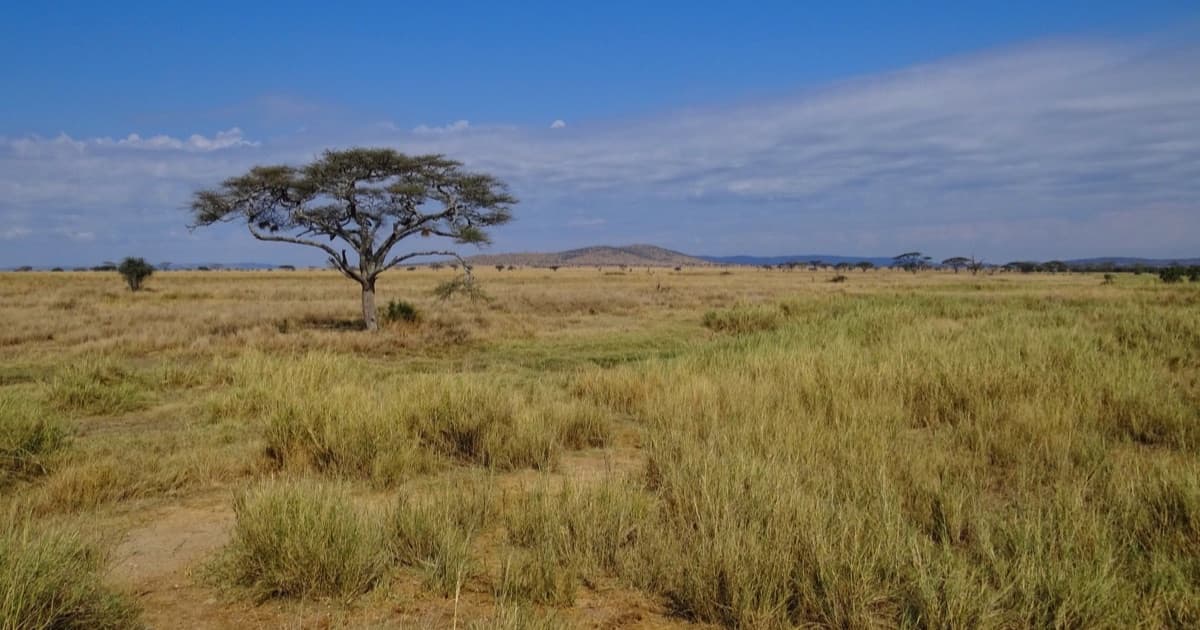
What to know before your first Tanzania safari
Tanzania is not a difficult destination for first-time safari visitors, but it rewards people who plan it properly. The park system is well-established, guides are professional, and the infrastructure along the northern circuit — Serengeti, Ngorongoro, Tarangire, Lake Manyara — is genuinely solid. The main mistakes first-timers make are not wildlife-related. They are logistical: wrong season, wrong parks for the time, too many stops in too few days, or an operator who doesn't have the licences they claim.
Seven to ten days is the right length for a first visit. Five days gives you a taste but feels rushed. Seven days covers the northern circuit properly. Ten days lets you add a beach extension in Zanzibar or a southern park like Ruaha.
The northern circuit is the right starting point for almost every first-timer. It has the highest wildlife density in the country, the best tourist infrastructure, and the most guides with experience handling first-time visitors. The southern parks — Ruaha, Nyerere, Katavi — are exceptional but suit people who've been on safari before and want solitude over guaranteed sightings.
Decision 1: When to go
The season you choose shapes everything else about your trip — which animals you'll see, how much you'll pay, and how busy the parks will be.
June to October (dry season) is the standard recommendation for first-timers. Vegetation is low, animals concentrate around water sources, and roads are at their most driveable. July and August bring the Great Migration's Mara river crossings in the northern Serengeti — one of the most dramatic wildlife events on earth. The downside: these months are also the most expensive and the most crowded. Book 6–12 months ahead if you're targeting July or August.
January to March is the second-best window and significantly underrated. February is calving season in the southern Serengeti — up to 8,000 wildebeest calves born per day, with intense predator activity on short grass. Fewer visitors than peak season, better lodge availability, and lower prices. This is when many experienced safari-goers travel.
November and December offer a workable compromise: short rains that typically come as brief afternoon showers, migratory birds in huge numbers, and accommodation prices below peak. December 24–January 1 is an exception — Christmas and New Year see a spike back to peak-season pricing.
Avoid April and May for a first visit. The long rains turn some park tracks into mud, certain areas become inaccessible, and while prices drop sharply, the experience is harder to manage if you don't know the parks. Save the green season for a return trip.
For a full month-by-month breakdown, see the best time to visit Tanzania guide.
Decision 2: Which parks to visit
For a 7-day first trip, the northern circuit covers the four parks most first-timers should see. The standard order from Arusha:
Tarangire National Park — Start here if visiting September–October. The Tarangire River draws elephant herds of 200–300 animals in the dry season, plus baobab forests that look unlike any other park. Often skipped by short itineraries in favour of going straight to Ngorongoro — a mistake.
Lake Manyara National Park — A compact park good for half a day or one full day. Famous for tree-climbing lions (though sightings are not guaranteed), a large flamingo population on the soda lake, and excellent birding. Good for easing into safari rhythms before the bigger parks.
Ngorongoro Conservation Area — Plan two nights here. The crater floor is a 260-square-kilometre natural enclosure where you can see lions, elephants, hippos, and Tanzania's only reliable black rhino population in a single day. The mandatory crater floor guide ($50–70/day) is hired at the main gate each morning — your operator should pre-arrange this.
Serengeti National Park — Plan three nights minimum. The Serengeti is the heart of the trip. Which zone you stay in matters: southern Serengeti for January–March calving, central Seronera year-round for leopards, northern Mara for July–October crossings. Ask your operator specifically where your camp is positioned relative to the season.
Decision 3: Who to book with
This is the decision that most first-timers get wrong — not because they choose badly but because they don't know how to check. Tanzania has hundreds of safari operators; not all of them are licensed.
TALA (Tanzania Association of Tour Operators) licensing is the baseline. Every legitimate safari operator working in Tanzania's national parks must hold a TALA licence. Ask for it. A reputable operator will share their licence number without hesitation; an unlicensed one will deflect.
TATO membership (Tanzania Association of Tour Operators) is an additional quality signal. Members have agreed to minimum service standards and ethical conduct rules.
Price is not a reliable proxy for quality. A $1,500 package can be legitimate and a $3,000 package can be overpriced. What matters is: are the park fees itemised separately? Is accommodation named specifically? Is the guide experience described? If an operator won't give you a line-item breakdown, that's a warning sign.
Browse TALA-verified operators on Safarani and contact them directly via WhatsApp. The operator directory lists each company's parks covered, activity types, and price range — no booking platform commission added.
What a safari day actually looks like
Most people's mental image of a safari — dawn game drive, big cats at close range, sundowner drinks — is accurate. But the day-to-day pace surprises first-timers who haven't managed their expectations.
A typical day: Wake at 5:30am. Game drive 6:00am–10:00am, when animals are most active and temperatures are cool. Return to camp for breakfast. Rest or relax through the midday heat. Afternoon game drive 3:30pm–6:30pm. Dinner and sleep early — camps are quiet after 9pm.
Driving inside national parks after sunset is prohibited. Most camps enforce this strictly; your guide will know the rules.
Sightings are not guaranteed. Not on any given day. A guide's skill, local knowledge, and radio contact with other vehicles significantly increases your odds — but wildlife moves unpredictably. Three nights in the Serengeti will almost certainly yield lions, elephants, and zebra; a leopard in a tree is exceptional, not standard. Adjust your expectations before you go, and the trip will exceed them.
Roads inside the parks are unpaved. Expect dust, corrugations, and bumps. Full days in a Land Cruiser are physically tiring by the third or fourth day. Pace yourself — don't book back-to-back all-day drives without a rest morning built in.
What to pack
The single most important rule: neutral colours only. Khaki, olive, beige, tan, grey. No bright colours, no white, and absolutely no camouflage — military-pattern clothing is illegal in Tanzania and can cause serious problems at checkpoints.
Avoid dark blue and black. Both colours attract tsetse flies, which bite through thin fabric.
Luggage: If your itinerary includes any internal bush flights — common on multi-park itineraries — you will face a 15kg total weight limit per person including hand luggage. Hard-sided suitcases are not permitted on small aircraft. Use a soft-sided duffel bag. This limit is enforced; overweight fees are charged per kilogram.
The items most first-timers forget:
- Binoculars — your guide has a pair but you want your own for game drives
- Power bank — camps sometimes have limited charging; game drives are long
- Fleece or warm layer — Ngorongoro crater rim sits at 2,200m elevation; mornings are cold year-round
- US dollars in small denominations — park fees, tips, and many purchases are USD cash; bills issued before 2009 are often refused
- Sunscreen with SPF 50+ — the Tanzanian sun at altitude is intense
Entry requirements
Visa: Most nationalities need a visa. The e-visa costs $50 (single entry) for most passport holders and is applied for online at evisa.go.tz before travel. US citizens pay $100 for a multiple-entry visa. Visa on arrival is also available at Kilimanjaro International Airport (JRO) and Dar es Salaam (DAR), but the e-visa is faster and avoids queues at immigration.
Passport: Must be valid for at least six months beyond your departure date from Tanzania, with at least two blank pages.
Yellow fever certificate: Required if you are arriving from or have recently transited through a yellow fever endemic country (including Kenya, Uganda, DRC, and many other African nations). The certificate is valid for life after vaccination. Carry the physical card — not just a photo.
Malaria: Tanzania is a malaria zone. Consult a travel health clinic 6–8 weeks before departure for antimalarial medication advice specific to your itinerary and health history. Use insect repellent (DEET-based) and sleep under a mosquito net — most camp rooms provide one.
Travel insurance: Not optional in practice. Medical evacuation from the Serengeti or remote parks can cost $10,000–50,000 without coverage. Buy a policy that includes emergency medical evacuation and trip cancellation before you fly.
How much does a first Tanzania safari cost?
The full cost breakdown is covered in the Tanzania safari cost article. The short version for planning purposes:
A 7-day northern circuit safari costs approximately:
- Budget (shared vehicle, campsites): $1,400–2,000 per person
- Mid-range (private vehicle, standard lodges): $3,500–5,500 per person
- Luxury (private vehicle, premium camps): $7,000–12,000 per person
These figures exclude international flights and visa fees. Park entry fees ($35–83/person/day depending on the park) are typically bundled into operator packages.
The safari cost calculator lets you adjust group size, park selection, and accommodation tier to build your specific budget.
The mistakes every first-timer makes
Booking the cheapest operator. Prices significantly below market rates almost always mean unlicensed operation, reduced park days, or hidden add-ons. A legitimate 7-day northern circuit private safari for two people costs at minimum $3,500 per person. Below that, ask specifically what's been cut.
Too many parks, not enough time. Six parks in seven days sounds impressive and delivers nothing. Spend at least two nights in each major park. Animals move — one day is often not enough for exceptional sightings.
Forgetting park fees aren't included in lodge rates. Lodge rates cover accommodation and meals. Park entry fees ($35–83/person/day) are separate. The Ngorongoro crater descent fee ($295 per vehicle) is also separate. Operators bundle these, but check your itemised quote.
Not tipping. Tanzania's service staff — guides, drivers, camp attendants — depend substantially on tips. A guide tip of $15–20 per person per day is standard. On a 7-day trip for two people, budget $300–450 for tips total.
Ignoring luggage weight limits. If your itinerary includes bush flights, the 15kg limit will be enforced. Pack for it before you fly internationally, not when you're at the departure gate in Arusha.
Wearing the wrong colours. Bright clothes startle animals and make you more visible to insects. Dark blue and black attract tsetse flies. Pack neutral colours before you leave home.