
What is in Arusha National Park?
Arusha National Park covers 552 km² of forest, wetland, open grassland, and highland moorland around Mount Meru. It has three distinct zones visible in a single day:
Ngurdoto Crater: A collapsed volcanic crater with a swamp floor visible from viewing platforms on the rim. Buffalo, waterbuck, warthog, and olive baboon inhabit the crater floor. You cannot descend — you observe from above. A smaller, quieter, less expensive version of Ngorongoro's concept.
Momella Lakes: Seven shallow alkaline lakes ranging from Momella (freshwater) to Rishateni (highly alkaline). Lesser and greater flamingos feed on the alkaline lakes. Hippos are resident. Hundreds of waterbird species. The lakes are bordered by open grassland where giraffe, zebra, and buffalo are consistently visible.
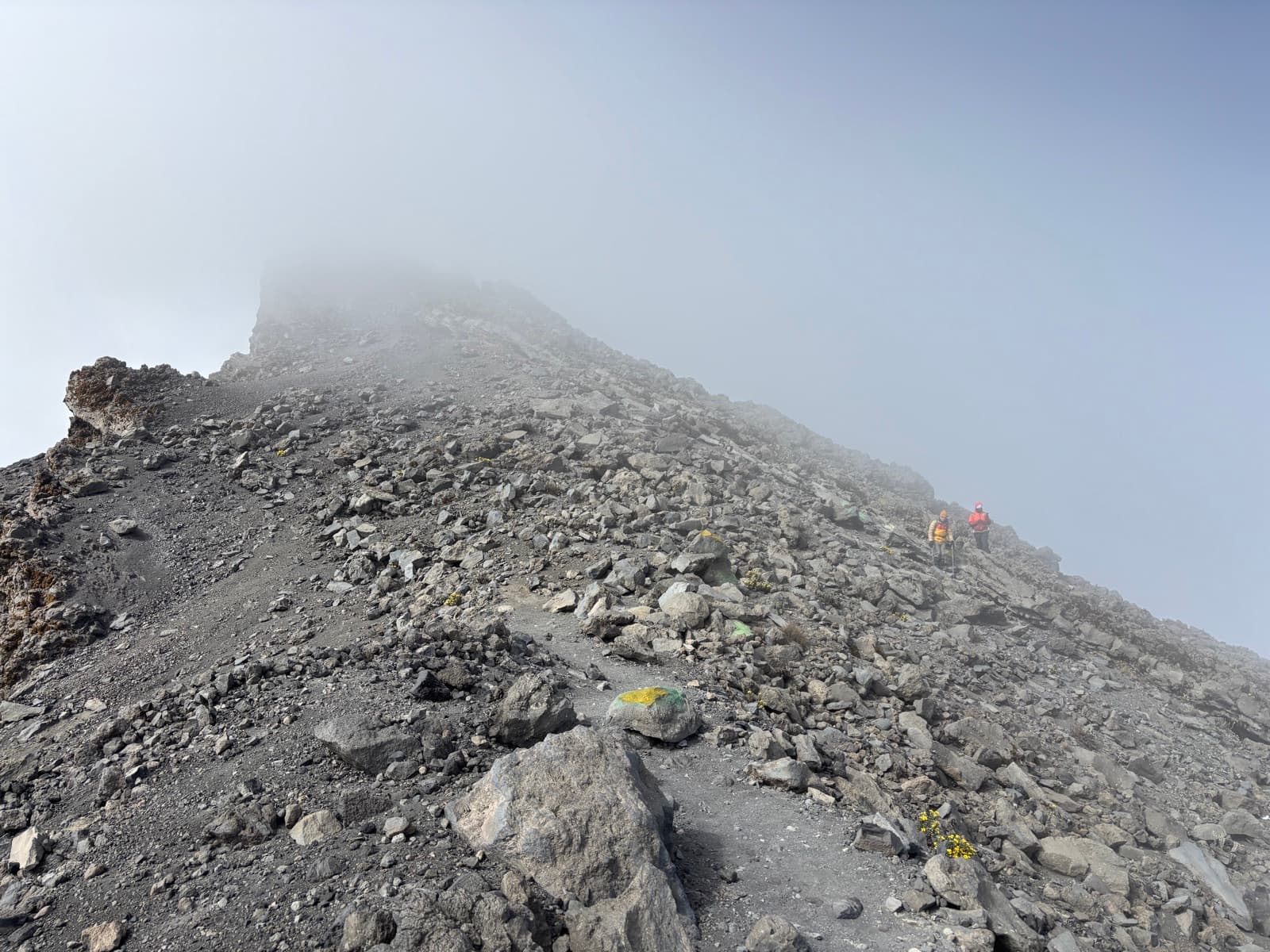
Mount Meru: Africa's fourth-highest peak at 4,566m, with a dramatic horseshoe caldera at the summit. The 3-day guided trek is one of East Africa's best mountain hikes and is often done as Kilimanjaro acclimatisation.
Wildlife: No big cats (lions, leopards, and cheetahs are absent — too close to human settlement). But the park has giraffe, African buffalo, elephant (occasionally), black-and-white colobus monkey, blue monkey, zebra, hippo, warthog, waterbuck, eland, and over 400 bird species.
How far is Arusha National Park from Kilimanjaro Airport?
Kilimanjaro International Airport (JRO) is 45 km from Arusha city and approximately 60–70 km from the park's Ngurdoto gate. The drive from the airport to the park entrance takes 60–75 minutes. This makes Arusha National Park viable as a first-day safari stop for visitors arriving at JRO without losing an entire day to travel.
Can you do Arusha National Park as a day trip?
Yes — Arusha National Park is Tanzania's most practical safari day trip. From a Arusha hotel, you can leave at 7am, be in the park by 7:30am, complete a full morning circuit of the crater rim, Momella Lakes, and giraffe plain by 1pm, and return to Arusha for lunch. A full day (7am–5pm) covers all three zones and allows for a Mount Meru base walk.
Cost of an Arusha National Park day trip from Arusha Park entry: $45/person. Vehicle + guide: $150–200/day. Total: approximately $200–260/person for a full day.
How to climb Mount Meru
Mount Meru is Tanzania's second-highest peak and one of East Africa's best mountain hikes. It is often used as a Kilimanjaro acclimatisation climb before a Kibo summit attempt.
The 3-day Meru route (standard) Day 1: Momella gate (1,500m) → Miriakamba Hut (2,514m) — 4–5 hours Day 2: Miriakamba Hut → Saddle Hut (3,570m) — 3–4 hours, with afternoon walk to Little Meru (3,801m) Day 3: Saddle Hut → Summit (4,566m) → Descent — 7–8 hours up, 4–5 hours down
Is Meru harder than Kilimanjaro? The summit route on Meru involves a steep, narrow ridge (the Cobra Point ridge) that requires hands for balance — more technically demanding than Kilimanjaro. Altitude effects are less severe at 4,566m than 5,895m.
Meru climb costs (2026) Park fees: approximately $240/person for 3 days. Operator package: $600–1,200/person (includes mandatory armed ranger, hut accommodation, guide, meals).
Best time to visit Arusha National Park
June–October: Dry season, best visibility of Mount Meru (cloud-free mornings), firm tracks. Best for the general wildlife and bird experience.
November–March: Short rains and short dry. The park is lush and green. Migratory birds present November–April. Mount Meru summit can be cloud-covered in the morning.
April–May: Long rains. Tracks can be muddy. Not recommended for hiking.