
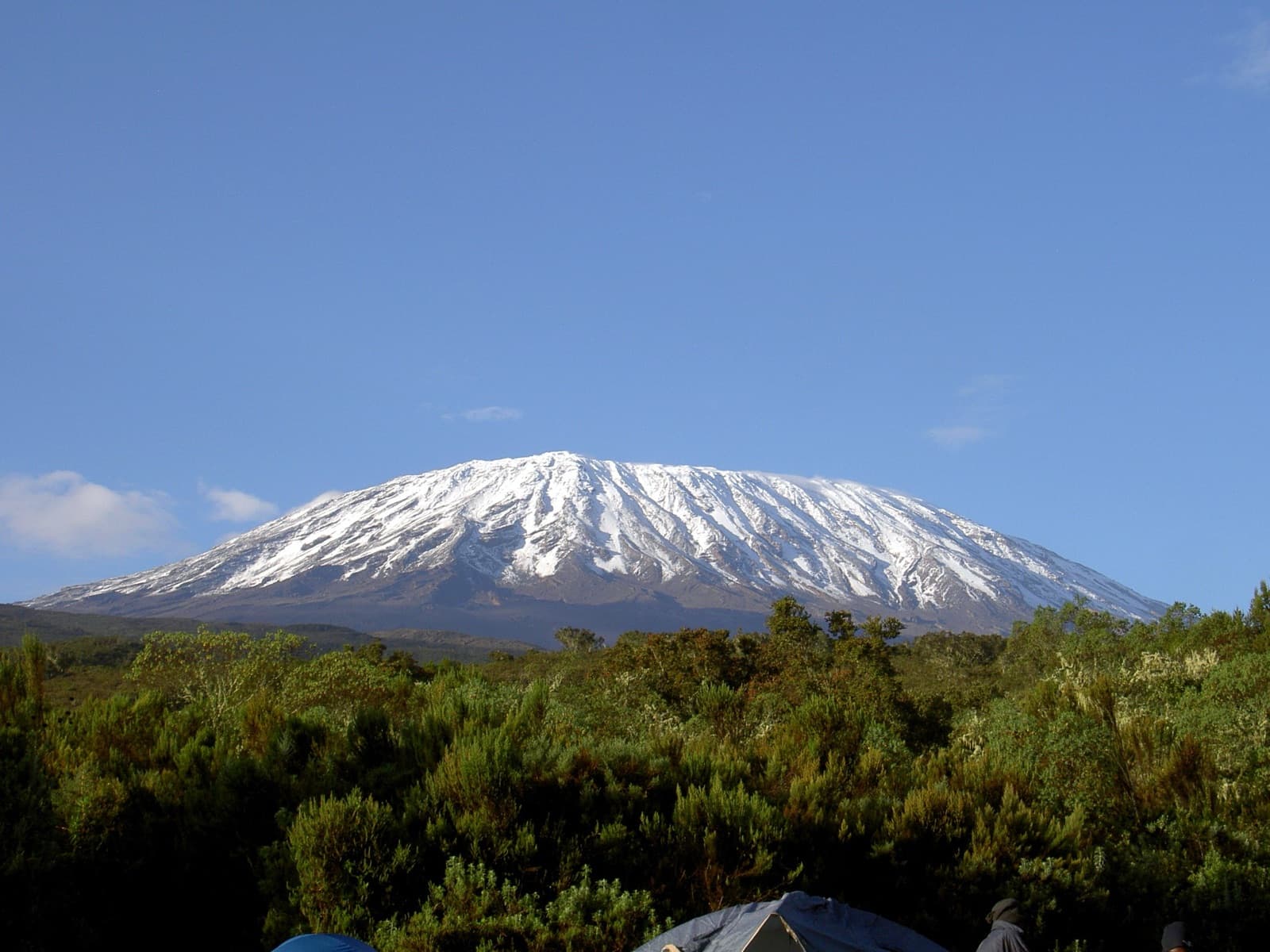
How hard is it to climb Kilimanjaro?
This is the most important question and it deserves an honest answer: Kilimanjaro is not a technically difficult mountain. The trails are steep hiking paths, not climbing routes. You don't need crampons, harnesses, or mountaineering experience.
What makes Kilimanjaro genuinely hard is the altitude. The summit at 5,895m means air contains roughly 50% of the oxygen you breathe at sea level. Around 77% of climbers experience Acute Mountain Sickness (AMS) at some point on the ascent — headache, nausea, fatigue, and disturbed sleep are normal. The question is whether your symptoms are manageable (continue slowly) or escalating (descend immediately).
Physical fitness helps with the climbing effort. But a very fit person who goes too fast will fail before a moderately fit person who goes slowly and gives their body time.
Kilimanjaro route comparison: which route is best?
Kilimanjaro has seven established routes. The route you choose is the most consequential decision you'll make.
Machame Route (6–7 days) — most popular, most scenic Approaches from the southwest through rainforest, heath, moorland, and alpine desert. The "Whiskey Route" has a good acclimatisation profile on 7 days — the summit success rate on the 7-day Machame is approximately 85–88%. On 6 days it drops to around 65–70%. Always choose 7 days.
Lemosho Route (7–8 days) — highest success rate The longest route, approaching from the west through pristine forest and traversing the Shira Plateau. Extra distance = more altitude gain and loss each day = better acclimatisation. The 8-day Lemosho has the highest summit success rate of any route: approximately 90%+. Fewer vehicles than Machame. The premium choice.
Marangu Route (5–6 days) — only route with huts The "Coca-Cola Route" is the shortest, cheapest, and has the lowest success rate: approximately 50–60%. The huts mean slightly more comfort than tenting, but the speed kills acclimatisation. If you must do Marangu for budget reasons, choose 6 days not 5.
Rongai Route (6–7 days) — quieter, drier Approaches from the north (near the Kenyan border). Drier conditions, lower vehicle density, different scenery. Good alternative if Machame is fully booked. Success rates comparable to Machame.
Northern Circuit (8–9 days) — most remote The longest route with the best acclimatisation profile. Circles almost the entire mountain. Very few climbers. Highest success rate after Lemosho.
How to get to Kilimanjaro
Kilimanjaro International Airport (JRO) Direct international flights from Nairobi (1 hour), Addis Ababa (3 hours), Amsterdam, Doha, Dubai, and several European hubs. The airport is 45 km from Moshi and 50 km from Arusha — your operator arranges pickup.
Moshi vs. Arusha as base Moshi (population 185,000) is the mountain town — 50 km from the park gate at Machame or Marangu. Most operators pick up from Moshi. Arusha is larger and better connected but further from the mountain. Either works.
Best time to climb Kilimanjaro
January–March: Warm, clear, good visibility at summit. The second dry season. Excellent conditions.
June–October: The main dry season. Coldest summit nights (−15 to −25°C at Uhuru Peak). Very clear. The busiest months are July and August.
November: Short rains begin — trails become slippery. Not recommended.
April–May: Long rains. Trails extremely muddy, visibility poor, summit success rates drop. Avoid.
December: Clear and dry. Christmas/New Year period sees high operator prices.
What happens on summit night?
Summit attempts begin at midnight from base camp (Barafu at 4,673m on Machame/Lemosho). The reason for the midnight start: you reach the crater rim (5,756m) at dawn, giving you daylight to descend. Uhuru Peak is a further 300m from the rim.
The midnight ascent is 6–7 hours of slow, continuous upward movement in darkness and cold (−10 to −20°C at the summit). Most climbers feel symptoms: breathlessness requiring frequent stops every 20–30 steps, headache, nausea, and a profound desire to stop. The trick is to keep moving — forward, slowly, steadily. "Pole pole" (Swahili for slowly slowly) is what your guide will say every 10 minutes.
Sunrise at the crater rim is one of the most beautiful moments most people will experience. The descent back to Barafu takes 3–4 hours, then a further 3 hours to the lower camp for the night.