
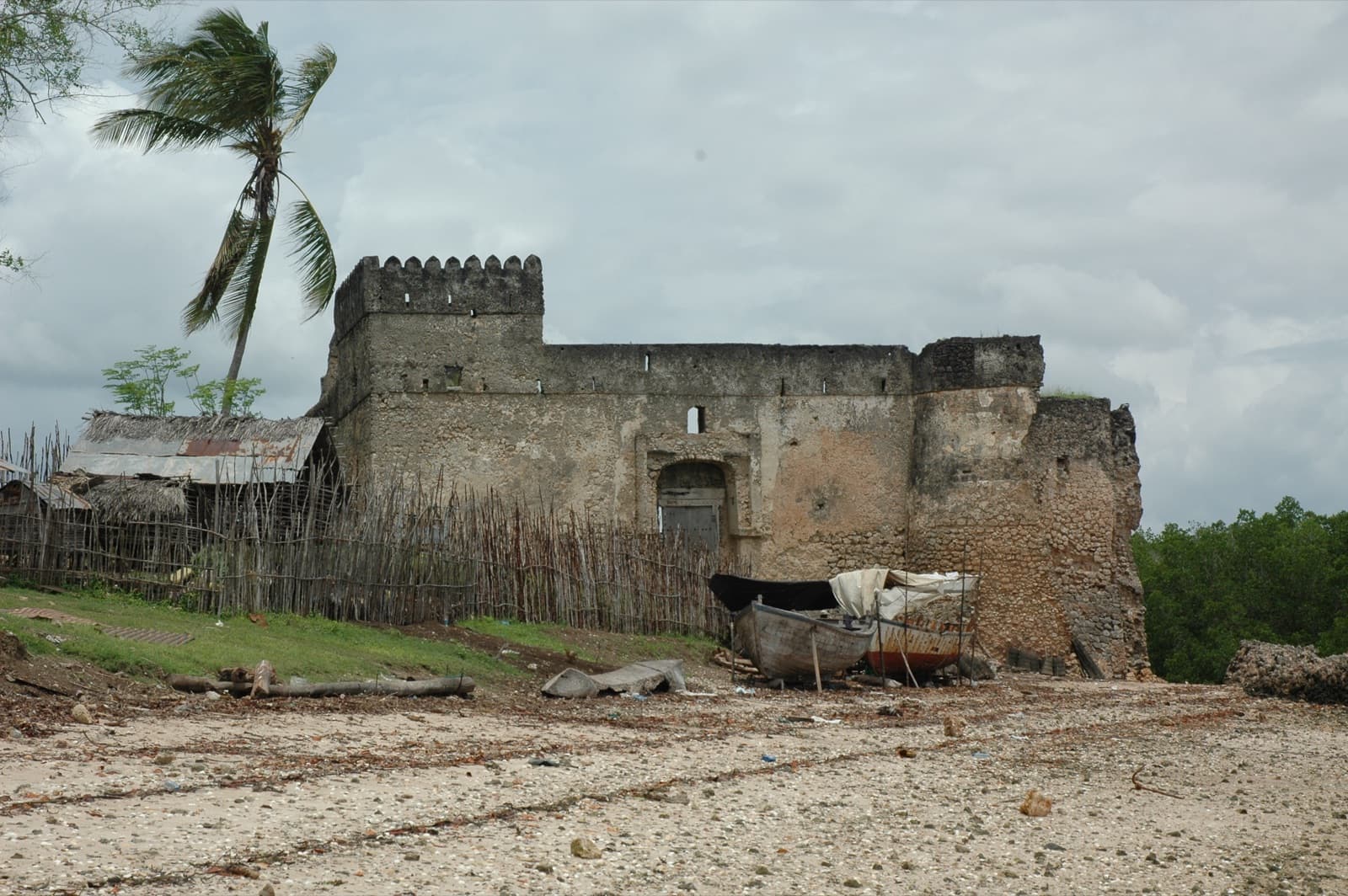
Who built Kilwa Kisiwani and why was it important?
Kilwa was founded by Arab and Shirazi (Persian) merchants around the 10th century AD, though oral tradition credits its founding to Ali ibn al-Hassan, a Shirazi prince, around 957 AD. The Mahdali Sultanate that ruled Kilwa from the 13th century onwards made it the dominant commercial power on the Swahili Coast.
The city's wealth came from controlling the export of gold from the kingdom of Mutapa (in modern Zimbabwe and Mozambique). Gold came north through inland trade routes to Sofala, then by dhow to Kilwa, where it was exchanged for Indian cloth, Chinese porcelain, and Persian luxury goods. At its peak, Kilwa minted its own copper coins — the first city in sub-Saharan Africa to do so.
The Portuguese arrived in 1498 under Vasco da Gama, and in 1505 Francisco de Almeida sacked Kilwa, ending its commercial dominance. The city recovered partially under the Omani Sultanate of Zanzibar but never regained its former greatness.
How to visit Kilwa Kisiwani — logistics
Getting to Kilwa Masoko (the mainland town):
- By air: Coastal Aviation flies Dar es Salaam to Kilwa Masoko (KIZ) — 1 hour. Flights 3x/week. Cost: $150–250 one way. This is the recommended option.
- By bus: Dar to Kilwa Masoko takes 8–10 hours by coach (multiple operators, TZS 30,000–45,000 / $12–18). The road is partially unpaved in stretches and rough.
Crossing to Kilwa Kisiwani island: Once at Kilwa Masoko, hire a boat from the Kilwa port (5-minute walk from town centre). The crossing to the island takes 15–20 minutes. Cost: TZS 10,000–20,000 each way (negotiate; this is not officially set). Take the first boat of the morning (8:00–8:30) to maximise time on the island before afternoon heat.
Entry fees and guides:
- UNESCO site entry: $10/person (payable at the island landing area)
- Official site guide: strongly recommended ($15–25 tip for a 2-hour tour)
- Boat hire for island crossing: TZS 10,000–20,000 each way
What to see at Kilwa Kisiwani ruins
Husuni Kubwa (Great Husuni) Palace: The largest pre-colonial building in sub-Saharan Africa — a sprawling 14th-century palace-warehouse complex built by Sultan al-Hassan bin Sulaiman. Its 100+ rooms, vaulted ceilings, octagonal bathing pool, and audience courts give a vivid picture of the wealth and sophistication of medieval Kilwa. The views from the upper terrace over the Indian Ocean and the mangrove-lined channel are spectacular.
The Great Mosque: The largest mosque on the East African coast, rebuilt multiple times between the 11th and 14th centuries. The current structure shows Shirazi and Arab architectural influences — coral stone vaulted roof, carved niches for Koran storage, and a large outer courtyard. The mihrab (prayer niche) is elaborately carved.
Gereza Fort: An Omani fort built in the 18th century on Portuguese foundations. The thick coral walls and gun emplacements tell the story of Kilwa's later history under Omani rule. Explore the cramped interior rooms and climb the walls for views over the surrounding mangroves.
Husuni Ndogo: A smaller, more enigmatic structure near Husuni Kubwa — possibly a caravanserai (merchant way-station) or an additional palace enclosure. Less studied than the main palace but offers interesting architectural details.
The small mosque and town ruins: Walking through the old town (much of it overgrown) reveals dozens of coral-stone house foundations, wells, and mosque remains from different periods. A guided walk contextualises what you're seeing.
Combining Kilwa Kisiwani with Songo Mnara
Songo Mnara — a second UNESCO island 5km south of Kilwa Kisiwani — contains ruins of a smaller but well-preserved 14th–15th century settlement: a palace, five mosques, and a merchant quarter. The contrast with Kilwa Kisiwani's grander scale is fascinating.
Combining both islands requires a full day. Arrange with your boatman the night before to include Songo Mnara in your tour ($10 additional per person for the Songo Mnara site entry). Allow 5–6 hours total for both islands.