
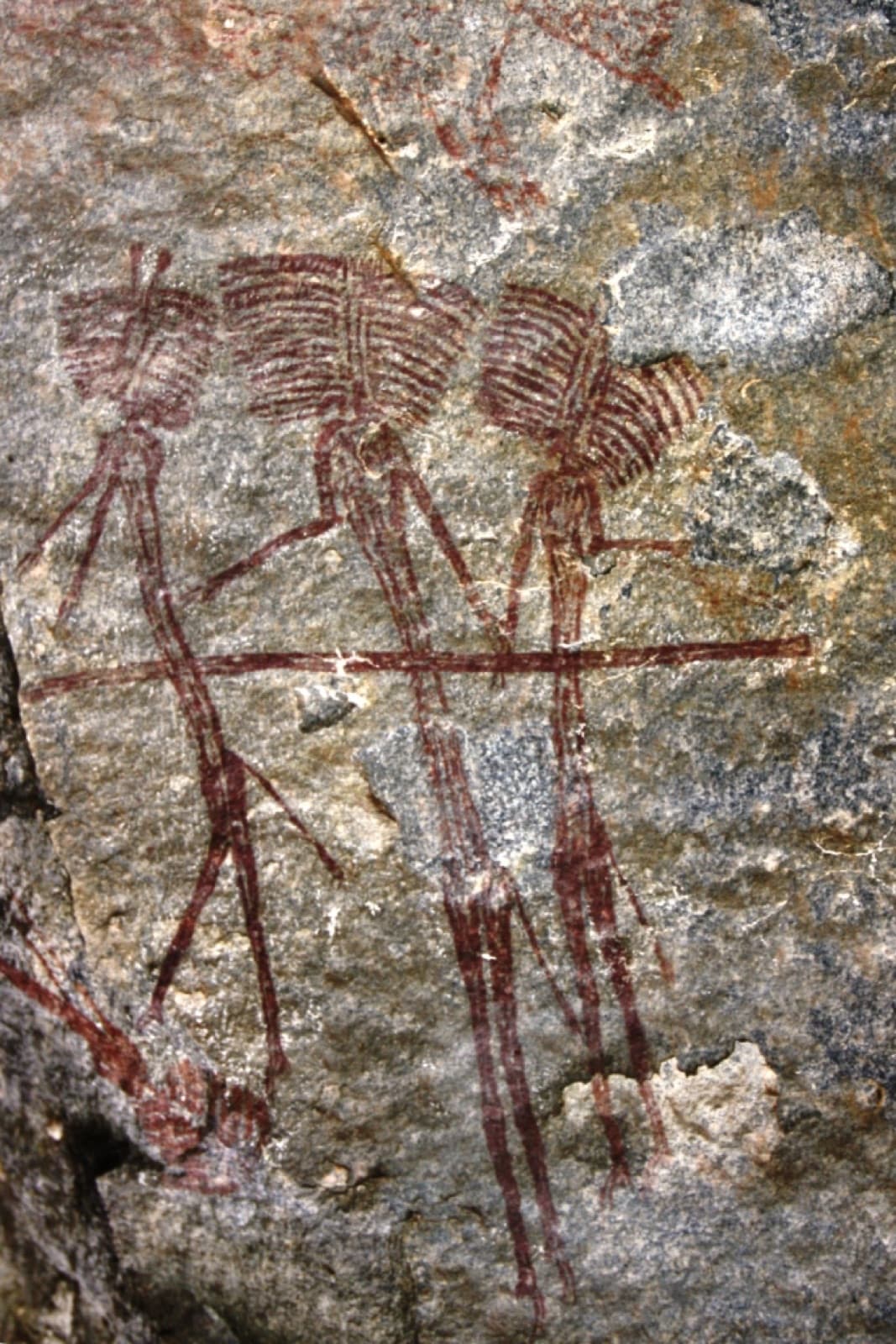
What are the Kondoa Rock Art Sites and why are they UNESCO-listed?
The Kondoa Rock Art Sites were inscribed on the UNESCO World Heritage List in 2006 for their outstanding universal value as evidence of human cultural and spiritual development over at least 2,000 years — and possibly much longer. The inscription area covers approximately 2,336 km² on the Masai Escarpment near Kondoa town in Dodoma Region.
The paintings were created using iron-oxide (red ochre), charcoal (black), and white kaolin across the flat rock faces and overhangs of the escarpment. They range from small finger-painted symbols to large, dynamic hunting scenes spanning several metres.
Researchers attribute the oldest paintings to ancestors of the Sandawe — a click-language-speaking people related linguistically to the Khoisan of southern Africa, who are thought to have practised rock art as part of shamanic ritual connected to hunting, rain-making, and healing. Later paintings show cattle herders, suggesting the sites were used by successive cultures over millennia.
How to get to Kondoa from Arusha or Dar es Salaam
From Arusha (recommended base):
- Drive south from Arusha to Babati (~2 hours on tarmac), then continue south to Kondoa town (~2.5 hours, partly tarmac)
- Total: 4–5 hours by private vehicle or bus
- Direct buses from Arusha to Kondoa run most days
From Dar es Salaam:
- Drive or bus northwest via Dodoma (~7–8 hours total)
- Or fly to Dodoma (45 min) then road transfer to Kondoa (~2.5 hours)
Accessing the sites: The most accessible rock shelter cluster is around Kolo village, 25 km north of Kondoa town on the main road. From Kolo, a 4WD or high-clearance vehicle is needed for the 5–8 km dirt tracks to individual shelters. A 2WD can manage Kolo itself in dry season.
Best time to visit Kondoa Rock Art Sites
June–October (dry season): Best. Roads to the shelters are passable, the bush is less dense (improving visibility), and temperatures are comfortable. July–September is peak season.
November–December (short rains): Manageable — brief showers but roads generally still accessible. Vegetation is green against the ochre rock faces.
January–February: Dry and often hot. Excellent for site photography with clear skies.
March–May (long rains): Roads to many shelters become impassable mud. Several sites cannot be reached. Not recommended unless specifically seeking solitude.
The best Kondoa rock art sites to visit
Kolo Rock Shelter B1 (the most famous): The most visited and most spectacular site — a large overhanging rock face covered in detailed paintings of eland, human figures in running poses, cattle, and geometric symbols. The scale and condition are remarkable. A guided visit takes 45–60 minutes.
Kolo B2 and B3: Adjacent to B1, these shelters show different painting styles and periods — some clearly older, more faded; others sharper and painted over existing work, demonstrating the site's long occupation history.
Pahi and Thawi shelters: More remote sites (15–20 km from Kolo) requiring a 4WD and advance guide arrangement. These contain some of the most naturalistically painted animals in the complex — eland and giraffe rendered with extraordinary skill — and see very few visitors.
Ferungi shelter: A large north-facing overhang with paintings in multiple registers. Particularly well-preserved due to protection from rain by the deep overhang. Contains rare white paintings alongside the typical red ochre figures.
Who made the Kondoa rock paintings?
The oldest paintings are attributed to ancestors of the Sandawe people — Tanzania's only click-language speakers, who now number around 60,000 in Kondoa District. The Sandawe share linguistic ancestry with the San (Bushmen) of southern Africa, and their oral traditions include references to healing dances and trance experiences consistent with the shamanic interpretation of African rock art.
Later paintings — particularly those showing cattle herding and different figure styles — are attributed to Nilotic pastoralists who arrived in the region more recently. The result is a visual palimpsest: different cultures painting over and alongside one another's work over two millennia or more.
Today, some Sandawe communities maintain oral traditions about the meaning of the paintings, though much knowledge has been lost. The Kondoa District Cultural Tourism Programme employs Sandawe guides who can share remaining traditions.