
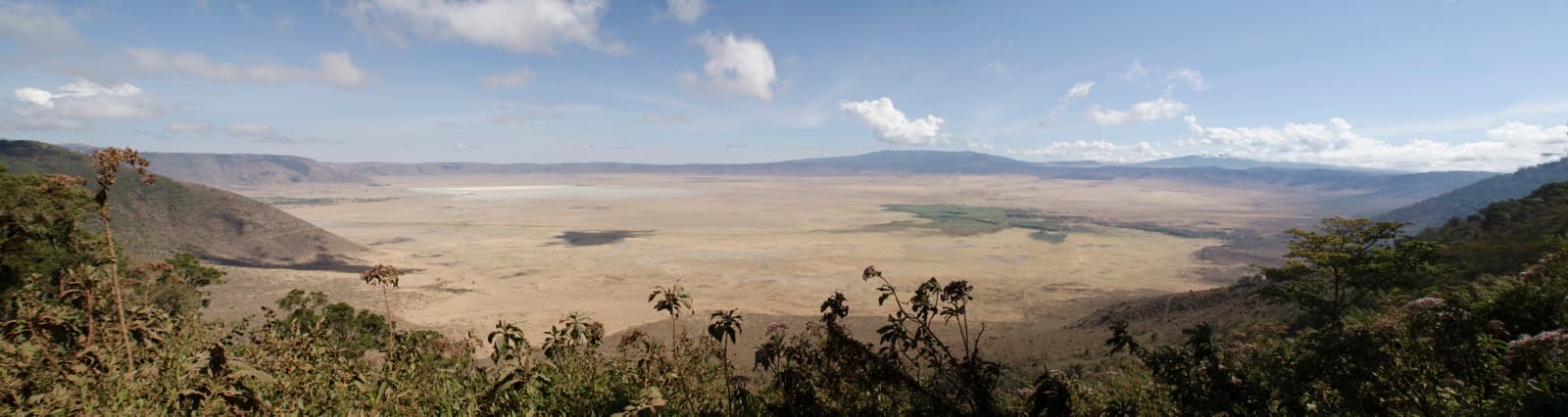
What is the Ngorongoro Crater and why is it special?
The Ngorongoro Crater formed approximately 2–3 million years ago when a massive volcano collapsed inward. The resulting caldera — 260 km² of grassland, swamp, and soda lake — became a natural enclosure. There are no natural exit routes for large mammals, so a population of approximately 25,000 animals has been resident for centuries.
The result is the highest wildlife density per km² of any unenclosed ecosystem in Africa. On a single morning game drive, it is realistic to see lion, elephant, black rhino, hippo, flamingo, hyena, jackal, zebra, wildebeest, and multiple antelope species. Big Five completion in a single day is common — rare at almost every other African destination.
The Ngorongoro Conservation Area (NCA) is managed by the NCAA (not TANAPA) and has a different, separate fee structure from Tanzania's national parks. This is important for budgeting.
How to get to Ngorongoro Crater
By road from Arusha
The main entrance gate at Lodoare is 180 km from Arusha — a 3–4 hour drive on tarmac that becomes rough after Karatu. Most operators drive from Arusha on day one, arriving for a rim-view lunch and afternoon drive.
Combined Serengeti itinerary (most common)
The majority of visitors see Ngorongoro as part of a northern circuit safari: Arusha → Ngorongoro (1–2 nights) → Serengeti (3–5 nights) → Arusha. The Ngorongoro–Serengeti road passes through the Naabi Hill gate. This sequence is highly recommended — you can also combine it with Tarangire at the start.
Crater descent logistics
Two descent roads exist: Lerai (southern) and Seneto (western). All vehicles must be registered 4WDs with a guide. Only 180 vehicles are permitted on the crater floor simultaneously. Early starts (gate opens at 6am, arrive 6:30am) avoid the mid-morning vehicle queue.
Best time to visit Ngorongoro Crater — month by month
Year-round: Unlike the Serengeti, Ngorongoro wildlife is permanently resident. There is no "wrong" month for the wildlife itself.
Best for dry conditions and visibility: June–October Short grass improves sightlines. The soda lake Magadi shrinks and flamingo concentrations increase. Firm crater floor tracks. Cold mornings on the rim (below 5°C) — pack accordingly.
Best for fewer crowds: April–May and November Long rains (April–May) make the rim foggy and rim lodges very atmospheric. Crater floor tracks can be muddy but passable in a 4WD. Wildlife is unchanged. Prices drop 30–40%. November is lighter rain — a good shoulder-season choice.
January–March: A second dry period. Clear views, good predator activity. Slightly fewer tourists than the June–October peak.
Practical tip: The crater is most crowded between 9am and 2pm. Arriving at the descent road at 6:30am and staying until 4pm gives you the quality morning light and avoids the midday vehicle concentration.
What wildlife will I see in Ngorongoro Crater?
Black rhinoceros: Approximately 26–30 black rhinos live in the crater — one of the largest viable populations in Africa. Sightings are not guaranteed (animals use thick bush) but are realistic with a patient guide. The odds here are higher than almost anywhere else.
Lions: The crater's lion prides are well-studied. The resident population is genetically distinct — over 60+ years of isolation has created visible inbreeding, visible in reduced mane development. These lions are completely habituated to vehicles. Multiple prides are found in the crater.
Hippo pool: The Mandusi Hippo Pool in the crater's northwest is a reliable stop — a reliable pod of 20–30 hippos. Crocodiles bask nearby.
Flamingos: Lake Magadi in the crater floor hosts flamingo populations ranging from hundreds to thousands, depending on season. Dry season concentrations are highest.
Elephants: Mostly large bull elephants visit the crater (breeding herds stay on the forested rim). Some of the largest-tusked bull elephants remaining in Africa descend to the floor from the surrounding forest.
Olduvai Gorge (45-minute detour): One of the world's most important palaeontological sites — where the Leakeys found Homo habilis fossils dated at 1.9 million years old. A museum at the site provides 30 minutes of essential context.