Serengeti travel guide — Tanzania safari tips
Travel guideSerengeti·

Serengeti Safari Guide 2025/2026: Costs, Best Time & What to Expect

Read in Swahili
SE

By Safarani editorial team

Last fact-checked 29 April 2026

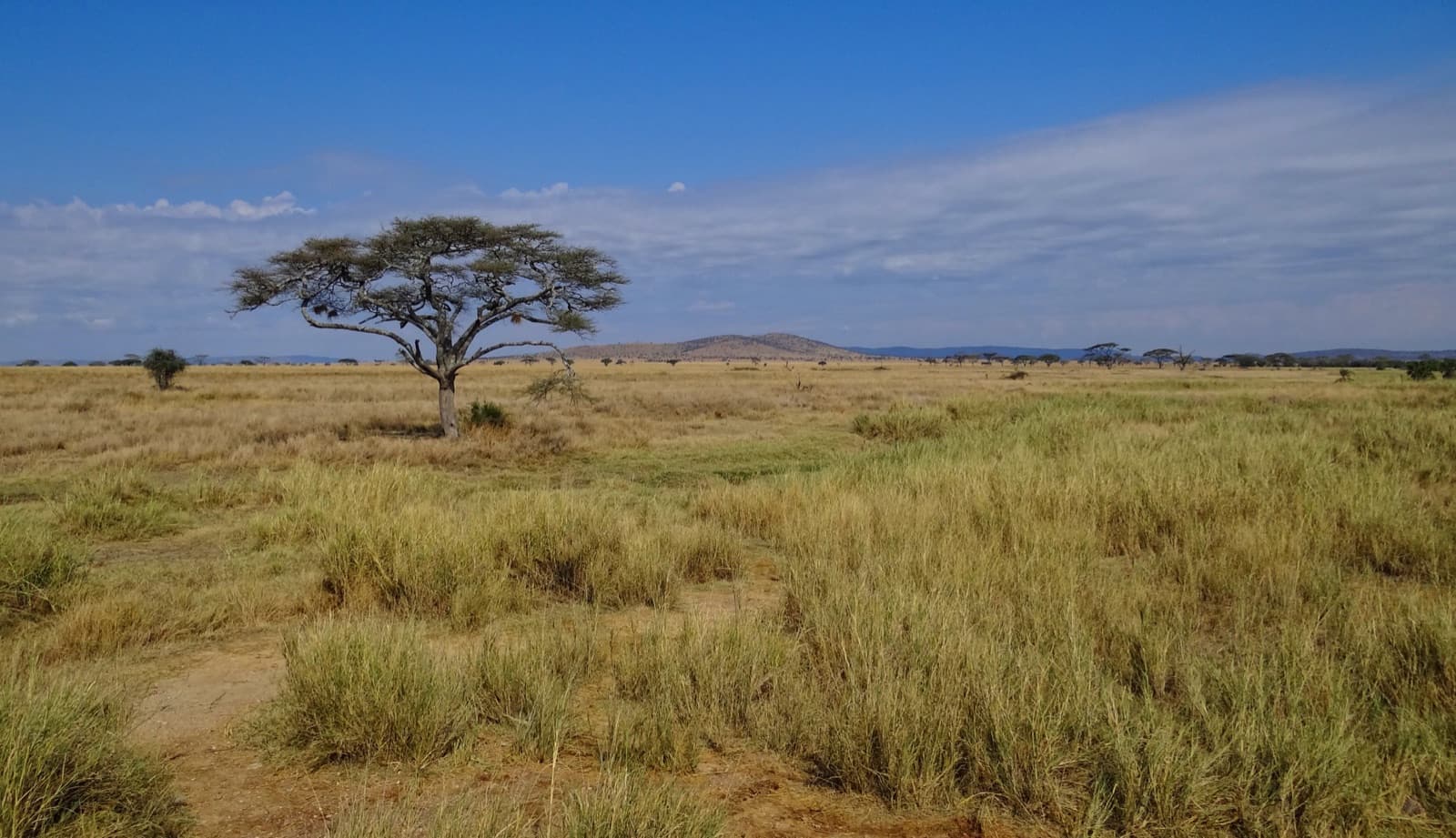
A Serengeti safari is the most compelling wildlife experience on Earth — 14,763 km² of open savannah where the Great Wildebeest Migration moves over 1.5 million animals in a continuous loop, and where lion prides of 20+ members hunt in broad daylight. The Serengeti sits in northern Tanzania, sharing its border with Kenya's Masai Mara Game Reserve. Together they form a single ecosystem — the Serengeti-Mara — that has operated unchanged for millennia. Tanzania's side holds the calving grounds, the cheetah plains, and the Mara River crossing sites that produce the iconic footage you've seen. The Kenyan side is where the herds go in high season. This guide answers every planning question: when to go for the migration, how much a Serengeti safari costs for different budgets, which zone to stay in, and what you will actually see on the ground.

Getting Started

Beginner Guide

What makes the Serengeti different from other safari destinations

The Serengeti has the world's largest lion population — over 3,000 resident lions in established prides. It has the world's highest cheetah density in open savannah. It has the Great Wildebeest Migration, the largest land animal movement on Earth. No other park combines all three.

What makes it uniquely accessible: Serengeti wildlife is habituated to vehicles over decades of safari tourism. Lions will sleep under your Land Cruiser. Cheetahs will use your vehicle as a raised observation point. These are wild animals, but unafraid — which makes for extraordinary close-range photography.

The park divides into distinct zones. Seronera Valley (central) has year-round high wildlife density and most budget/mid-range camps. The Ndutu plains (south) are where wildebeest calving happens from January to March. The northern Mara region (Kogatende, Lamai) is where river crossings occur from July to October.

How to get to the Serengeti from Arusha

By charter flight (recommended)

Arusha Airport (ARK) to Seronera, Grumeti, or Kogatende airstrip: 45–60 minutes. Coastal Aviation, Air Excel, and Auric Air operate scheduled morning flights. Prices run $250–380/person one way. Most northern circuit operators include flights in package prices.

By road from Arusha

The overland drive takes 7–9 hours via Ngorongoro Conservation Area (you pay NCA entry fees in transit). Roads inside the park are unpaved; a 4WD vehicle is non-negotiable. Overland is cheaper but exhausting — most visitors who drive one way fly back.

From Kilimanjaro International Airport (JRO)

JRO is 50 km from Arusha — your operator picks you up, you overnight in Arusha, and depart for the Serengeti the following morning via charter or road.

Best time to visit the Serengeti — month by month

January–February: Calving season (Ndutu plains) The wildebeest calving peak. Up to 8,000 calves born per day. Predator activity — cheetahs, lions, hyenas, wild dogs — is at maximum intensity around the calving grounds south of Seronera. Ndutu-area camps fill up. Fewer tourists than July–August despite the dramatic wildlife. One of the best times overall.

March–May: Long rains — avoid Rain makes roads difficult and some areas inaccessible. Many camps close. Wildlife disperses across the ecosystem. Not recommended for first-time visitors.

June: Shoulder — very good value Dry season begins. Grass is still somewhat long from the rains. Herds begin moving north toward Kenya. Excellent predator activity. Prices are lower than peak and vehicles are fewer.

July–October: Peak season — river crossings The herds are in the north. The Mara River crossings — crocodiles, panic, noise, chaos — happen repeatedly between July and October. The most iconic Serengeti images come from this period. Camps book out 6–12 months ahead. July and August are the most crowded and most expensive months of the year.

November: Short rains — good value The short rains (vuli) begin. Herds start moving back south. The plains green up rapidly. Excellent photography light after the first rains. Fewer tourists, lower prices.

December: Very good Dry conditions return. Christmas/New Year period sees a spike in visitors and prices at the top end. Outside the holiday window, December is excellent value.

What wildlife will you see in the Serengeti?

The Big Five: Lion (most reliably seen in East Africa here), leopard (Rocky kopjes and riverine forest in Seronera), elephant, buffalo, and black rhino (rare — restricted to Moru Kopjes area).

The Great Wildebeest Migration: 1.5 million wildebeest + 200,000 zebra + 350,000 gazelle moving in a clockwise loop. The Mara River crossings (July–October) and the calving grounds (January–March) are the two peak moments.

Cheetahs: Ndutu and Seronera Valley are among the world's best cheetah-viewing areas. Coalition males and solitary females with cubs are seen regularly.

Wild dogs: Present in the Serengeti but less reliably seen than in Ruaha or Selous. Ask your guide whether a pack has been recently reported.

Hot air balloon safaris: Available from Seronera and several camps, departing at dawn. Approximately $480/person including bush champagne breakfast. A different perspective on the landscape that most people consider the highlight of their trip.

Budget Planning

Costs

How much does a Serengeti safari cost in 2025/2026?

Park entry fees (TANAPA 2026 official rates)

  • High season (July–October, January–February): $80/person/day
  • Low season (all other months): $60/person/day
  • Vehicle fee: $40–60/vehicle/day (split across your group)

Budget safari (camping)

  • Public campsite: $50–80/person/night
  • Shared vehicle + guide: $180–240/day (split 4–6 ways = $30–60/person)
  • Park fees: $60–80/person/day
  • Total per person per day: $140–220 (cheaper with 4+ people)
  • 5-day trip for 2 people (budget): approximately $1,800–3,000/person total

Mid-range safari (permanent tented camp)

  • Lodge/camp: $250–450/person/night including meals
  • Private vehicle + guide included in most packages
  • Park fees: included
  • Total per person per day: $380–600 all-inclusive
  • 5-day trip for 2 people (mid-range): approximately $3,500–6,000/person total

Luxury safari (private tented camp)

  • Camp rate: $600–2,000+/person/night all-inclusive
  • Private vehicle, guide, butler, airstrip transfers all included
  • Total per person per day: $800–2,500+
  • 5-day trip (luxury, 2 people): approximately $8,000–18,000/person total

Hidden costs to budget for

  • Hot air balloon: $480/person (optional but popular)
  • Guide and camp staff tips: $30–40/person/day
  • Kilimanjaro International Airport (JRO) to Arusha transfer: $50–80
  • Travel insurance covering evacuation: $80–150/person/trip

Is a Serengeti safari worth the cost? The Serengeti consistently ranks as the world's top safari destination in independent traveller surveys. No other park delivers the same combination of guaranteed wildlife, landscape, and scale.

Travel Advice

Travel Tips

Practical tips for a Serengeti safari

Book your specific zone, not just "Serengeti." The park is 14,763 km² — what you see depends entirely on where you're based. If you want river crossings, book a camp in the north (Kogatende or Lamai region). If you want calving, book Ndutu. Your operator should select zone based on your exact travel dates, not just park name.

Pack for both cold and hot. Dawn game drives can drop to 12°C in the open vehicle. Afternoons reach 32°C+. A fleece or down jacket, a hat with a brim, and SPF 50+ sunscreen are all essential.

Bring a telephoto lens. 100–400mm covers most situations. Animals are often close enough for 70–200mm. The Serengeti is one of the world's great wildlife photography destinations — a phone camera alone will frustrate you.

Limit yourself to one or two parks if budget is a constraint. Multi-park "highlights" itineraries compress 5 parks into 7 days. Three full days in the Serengeti produces fundamentally better encounters than 1.5 days at each of five parks.

Book 4–8 months ahead for peak season. Camps in the northern migration zone sell out. July and August availability disappears by February–March each year.

Frequently asked questions about the Serengeti

How long should I spend in the Serengeti? Minimum 3 nights for a meaningful experience; 4–5 nights is ideal. Each night covers two game drives (dawn and late afternoon), so 3 nights = 6 drives — enough to see the range of what the park offers. Shorter stays feel rushed once you're there.

When is the wildebeest migration in the Serengeti? The migration is year-round, but the two most dramatic moments are: calving season on the southern plains (January–March, peak in February) and Mara River crossings in the north (July–October). The herds are always somewhere in the ecosystem — ask your operator which zone they're in during your specific travel dates.

How much does a Serengeti safari cost per person? Budget camping safaris cost $140–220/person/day. Mid-range lodge safaris cost $380–600/person/day all-inclusive. Luxury private camps cost $800–2,500+/person/day. A 5-day mid-range safari for two people costs approximately $4,000–6,000/person total including flights from Arusha.

Can you do a Serengeti safari as a day trip from Arusha? No — the drive from Arusha takes 7–9 hours. Charter flights take 45–60 minutes but cost $250–380 each way. Day trips are not practical or worthwhile. The minimum stay is 2 nights.

What animals are in Serengeti National Park? The Serengeti has lion (3,000+), leopard, cheetah, elephant (4,000+), Cape buffalo (75,000+), hippo, giraffe, zebra (200,000+), wildebeest (1.5 million+), wild dog, hyena, jackal, 500+ bird species, and over 30 other large mammal species. The Big Five are all present.

What is the minimum number of days for a Serengeti safari? Two nights is the practical minimum — giving you three partial game drives. Most experienced operators recommend 3–4 nights minimum to do justice to the park.

Is it safe to go on a Serengeti safari? Yes. You cannot leave a registered vehicle without guide permission inside the park. The animals are wild but habituated to vehicles — they do not associate vehicles with threat. Your guide controls all vehicle movements.

Browse verified Serengeti safari operators on Safarani.

Ready to book?

Browse verified Tanzania operators running trips to Serengeti.

Browse operators →