
What is Songo Mnara and why is it UNESCO-listed?
Songo Mnara is a small tidal island (approximately 2 km × 1 km) in the Kilwa Archipelago, 5 km south of Kilwa Kisiwani. Its ruins represent a 14th–16th century Swahili merchant settlement that reached its peak during the same period as Kilwa Kisiwani — when the East African coast controlled the trade of Indian Ocean goods with the gold-producing interior of Africa.
The UNESCO inscription (1981) recognises both Kilwa Kisiwani and Songo Mnara as outstanding examples of the Swahili trading civilisation that once connected East Africa to the Arab world, Persia, India, and China. Songo Mnara specifically demonstrates the full urban plan of a Swahili coastal town at a scale of preservation unique in East Africa.
Unlike Kilwa Kisiwani — which was occupied from the 10th century until the Portuguese disruption of 1505 and beyond — Songo Mnara appears to have been a planned extension town established in the 14th century and abandoned relatively quickly. This abandonment at a single historical moment is part of why its residential quarter is so remarkably well-preserved.
How to visit Songo Mnara — logistics
Getting to Kilwa Masoko:
- By air: Coastal Aviation flies Dar es Salaam to Kilwa Masoko 3x/week (~1 hour). This is the recommended approach — the road is 8–10 hours from Dar.
- By bus: From Dar es Salaam's Ubungo terminal, buses to Kibiti, then onward to Kilwa Masoko. Journey time 8–10 hours.
Boat crossing from Kilwa Masoko to Songo Mnara:
- Hire a motorised dhow from Kilwa Masoko port — 30–45 minutes to Songo Mnara
- Cost: TZS 50,000–100,000 for the boat (fits 4–6 people), negotiate with captain
- Arrange the day before through your guesthouse or the Kilwa District Cultural Office
- The best combined plan: leave Kilwa Masoko at 7:30, visit Kilwa Kisiwani first (3 hours), boat to Songo Mnara for lunch and afternoon (2–3 hours), return by 16:00
Guide: An official guide is required for Songo Mnara. The same guide who covers Kilwa Kisiwani can continue to Songo Mnara — arrange a full-day guide (TZS 30,000–50,000) rather than separate guides for each island.
What to see at Songo Mnara
The Palace: The most imposing structure — a two-storey coral stone palace with an internal courtyard, arched doorways, and carved plaster decoration. Though less grand than Kilwa's Husuni Kubwa, it preserves fine architectural details including a carved ornamental arch and the foundations of what were once vaulted reception rooms. The carved plasterwork in niches and doorframes shows the aesthetic sophistication of the ruling class.
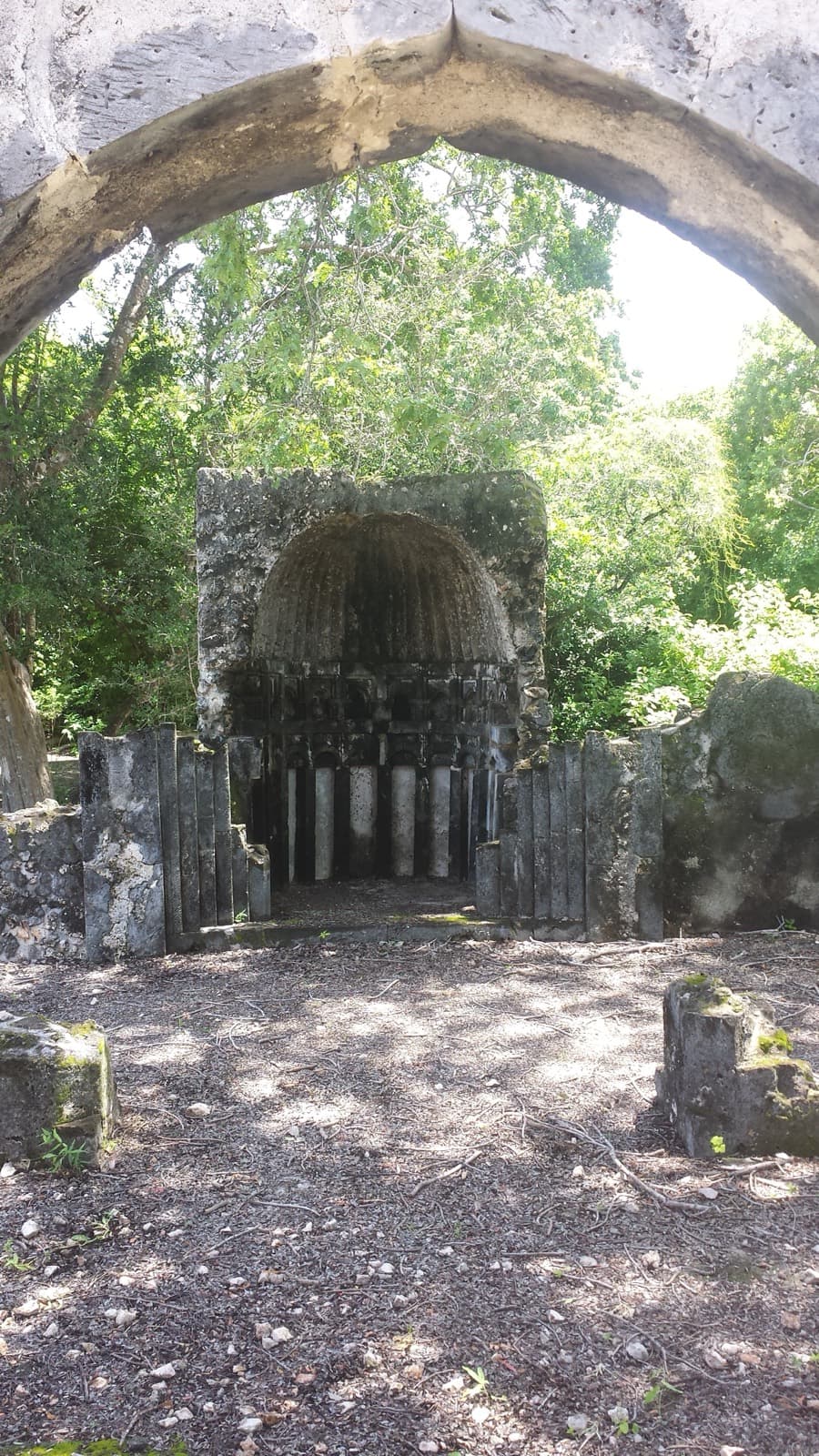
Five mosques: Songo Mnara's five mosques (of varying size and period) are the best evidence of the island's function as a substantial residential community rather than simply a trading post. Mosques in Swahili settlements are directly correlated with population — five mosques suggests a town of several thousand inhabitants. The main mosque has a well-preserved mihrab (prayer niche) in carved plaster.
The residential quarter (33 houses): The most remarkable feature of Songo Mnara. Thirty-three stone houses — ranging from modest single-room structures to multi-room merchants' residences — survive in sufficient condition to walk through. This is the only place in East Africa where the complete residential fabric of a medieval Swahili town can be examined. Detailed excavation has revealed the layout of courtyards, kitchen areas, sleeping rooms, and storage.
The beach and mangrove edges: Songo Mnara island is uninhabited. Its beaches are pristine, fringed with mangroves, and backed by the ruins. The contrast of white sand, blue Indian Ocean, and ancient coral stone is extraordinarily beautiful.
How is Songo Mnara different from Kilwa Kisiwani?
The two islands are complementary rather than repetitive:
Kilwa Kisiwani = scale and grandeur. Husuni Kubwa palace (the largest pre-colonial building in sub-Saharan Africa), the Great Mosque (the largest on the East African coast), and the Gereza Fort. Kilwa was the commercial capital, the hub of the gold trade.
Songo Mnara = completeness and intimacy. The residential quarter shows how Swahili people actually lived. Walking through the 33 houses — seeing the scale of individual rooms, the orientation of doorways, the arrangement of kitchen and sleeping areas — creates a connection with past inhabitants that Kilwa's monumentalism cannot.
Visiting both in a single day gives a comprehensive picture of the medieval Swahili world that neither island can offer alone.