
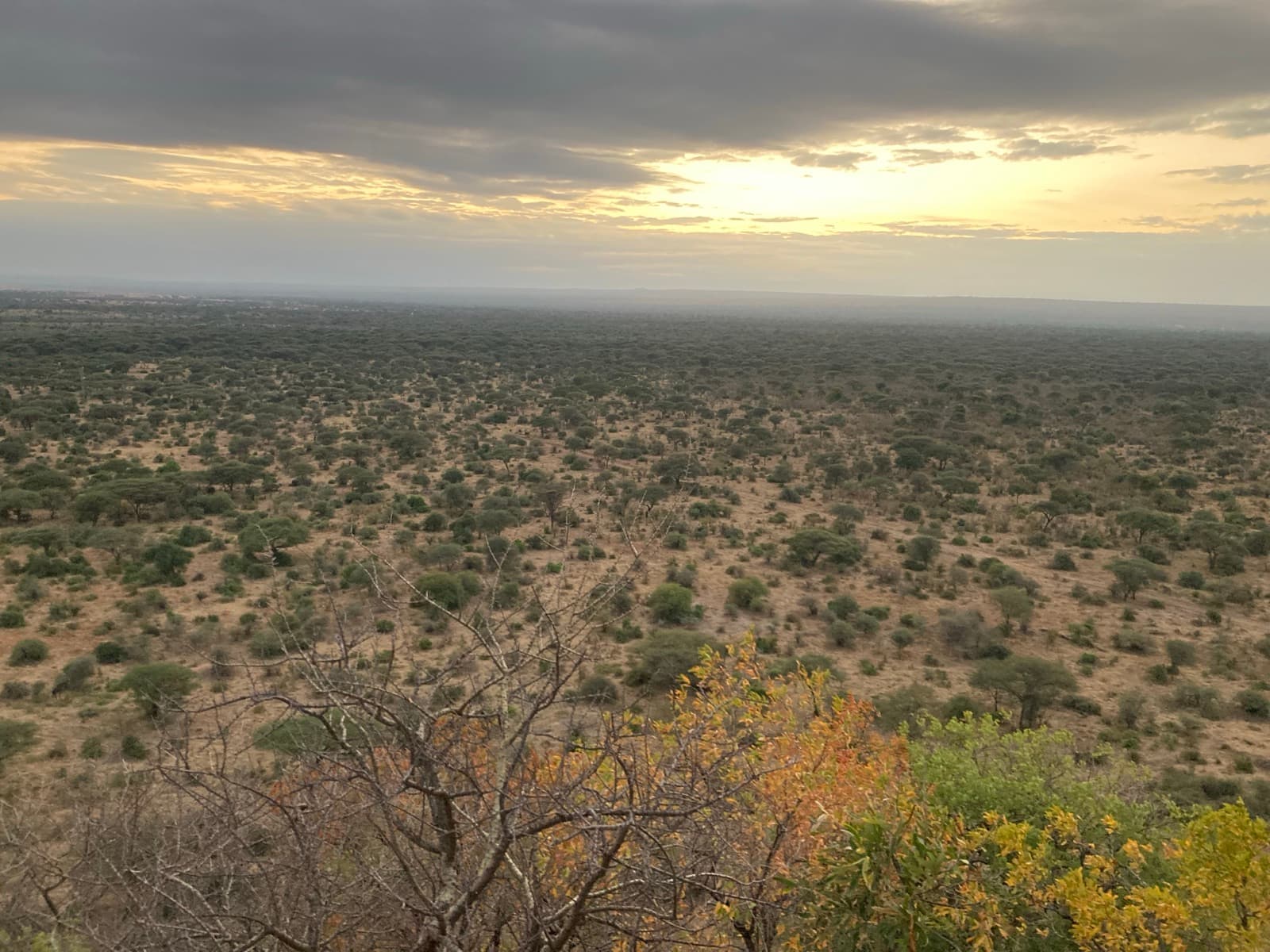
What is Tarangire National Park famous for?
Tarangire is famous for three things: the largest elephant herds in Tanzania, the most dramatic baobab landscape in East Africa, and one of the continent's best bird watching destinations with over 550 recorded species.
In the dry season the park pulls animals from across the 20,000 km² Tarangire–Manyara ecosystem. Wildebeest, zebra, buffalo, eland, and hartebeest join the elephant concentrations around the Tarangire River. The result is a dry-season wildlife density that rivals the Serengeti — with a fraction of the vehicles.
The park's ancient baobab trees — some estimated at 2,000+ years old — give the landscape a painterly quality unlike anywhere else in the northern circuit. At sunset, with elephants silhouetted against the baobabs and the golden grass, Tarangire is one of the most photogenic parks in Africa.
How to get to Tarangire National Park
By road from Arusha
The Kwa Kuchinja gate is 120 km from Arusha — a 2 to 2.5 hour drive on the Arusha–Dodoma highway. This is the easiest access of any northern circuit park. Most operators drive from Arusha on day one, arriving at the park by late morning.
As a day trip
Tarangire is the most practical northern circuit day safari from Arusha. A full-day drive gives you 6–7 hours in the park. It works, but overnight stays are significantly better — morning and evening game drives are where the quality encounters happen.
In a northern circuit itinerary
Tarangire is typically the first stop on a combined safari: Arusha → Tarangire (1–2 nights) → Lake Manyara (1 night) → Ngorongoro (1–2 nights) → Serengeti (3–4 nights). This sequence works geographically and builds in pace from the most accessible park to the most remote.
Best time to visit Tarangire National Park
June–October (dry season) — the peak elephant experience
This is when Tarangire earns its reputation. Water sources across the wider ecosystem dry up, and animals concentrate along the Tarangire River in extraordinary numbers. Elephant herds of 200–300 animals are documented in August–September. Predator activity follows prey density — lion, cheetah, and leopard sightings improve dramatically as the season progresses.
November–May (wet season)
The elephant herds disperse when rains bring water elsewhere. The park becomes strikingly green and floral. Migratory birds arrive from the north (November onward — over 100 Palearctic migrant species). Baby elephants and other young animals are abundant. Vehicle density drops. Prices are 30–40% lower. If elephants in huge numbers are not your priority, the wet season is excellent value.
January–February
A short dry spell within the wet season. Some wildlife concentration happens again — not as dramatic as July–September, but much better than the rainy peak of March–April.
What animals are in Tarangire National Park?
Elephants: The signature species. Dry-season herds of 100–300+ animals at the Tarangire River are documented annually. Some of Tanzania's largest-tusked bulls are resident here.
Tree-climbing lions: Tarangire lions sometimes rest in the branches of sausage trees (Kigelia africana) and large acacias — a behaviour more commonly documented here and at Lake Manyara than anywhere else in East Africa.
African wild dogs: Tarangire has one of the more reliable northern circuit wild dog populations. Ask your guide before your morning drive whether a pack has been recently reported — guides communicate sightings at the gate.
Birds (550+ species): The yellow-collared lovebird (endemic to this area), several species of hornbill, the pale-billed hornbill, southern ground hornbill, and an extraordinary diversity of raptors. The dry-season waterhole areas attract hundreds of species in a single morning.
Other wildlife: Gerenuk (long-necked antelope), fringe-eared oryx, greater kudu, impala, zebra, wildebeest, giraffe, buffalo, hippo (in the river), and over 400 other bird species.