
What to know before you go
"Zanzibar" is used for both the main island (officially Unguja) and the wider archipelago that includes Pemba Island to the north and dozens of smaller islets. When people say "Zanzibar" they almost always mean Unguja.
The island is about 90 km long and 30 km wide. Stone Town is on the western coast — this is where most international flights arrive, where the ferry from Dar docks, and where most budget guesthouses are. The beach areas sit on the north coast (Nungwi, Kendwa) and the east coast (Paje, Jambiani, Matemwe). Stone Town to Nungwi by road takes about 1.5 hours.
Zanzibar is majority Muslim. This matters practically: dress modestly away from the beach and resort grounds — shoulders and knees covered, for both men and women. Ramadan is observed seriously in Stone Town. The pace is deliberately slow.
If you're choosing between Tanzania's three island destinations, the short version: Zanzibar is the busy, well-connected option with the most accommodation choice and the only Stone Town. Pemba is quieter, greener, and the better dive destination but harder to reach. Mafia is the quietest and the only place where whale sharks regularly appear (October–March).
Where is Zanzibar exactly?
Zanzibar sits at roughly 6°S, 39°E in the western Indian Ocean, about 35 km from the Tanzanian port city of Dar es Salaam. It's at the southern end of the Swahili Coast, the stretch of East African coast historically linked by monsoon trade winds, dhow routes, and the Swahili language.
Time zone: East Africa Time (UTC+3), same as the Tanzanian mainland and Kenya. No jet lag adjustment from within East Africa.
Is Zanzibar part of Tanzania?
Yes. Zanzibar joined the United Republic of Tanzania in 1964, a few months after the Zanzibar Revolution. The "Tan" in Tanzania refers to Tanganyika (the mainland), the "Zan" to Zanzibar.
Practically: your Tanzania visa or e-visa covers Zanzibar. You go through a brief customs and immigration check when arriving by ferry from Dar, but no separate visa is needed. Citizens of countries that enter Tanzania visa-free can visit Zanzibar without a visa.
How to get to Zanzibar
By air
Zanzibar International Airport (ZNZ) is in the south of the island, about 5 km from Stone Town. It receives direct international flights from Nairobi (1 hour), Doha (5–6 hours), Dubai (5 hours), Addis Ababa, and several European cities (Amsterdam, Istanbul, others) in high season.
From within Tanzania, the fastest route is Dar es Salaam (DAR) to Zanzibar (ZNZ): a 20-minute flight. Operators include Precision Air, Air Tanzania, and charter airlines Coastal Aviation and Auric Air. Prices run around $80–180 return depending on season and lead time. Book 2–4 weeks ahead in shoulder season; 6–8 weeks for July–August or December holidays. Air Tanzania's website sometimes runs cheaper Dar–Zanzibar fares than aggregators — worth checking direct.
By ferry
High-speed ferries cross from Dar es Salaam's ferry terminal to Zanzibar's Malindi port in about 90 minutes. Multiple operators run the route several times a day; tickets are around $35–55 per person one way. The crossing can be rough in heavy swell — if you're prone to seasickness, fly.
Buy ferry tickets from the official operator offices at the terminal, never from touts approaching you on the street.
When is the best time to visit Zanzibar?
The local rhythm follows two monsoons: the kaskazi (NE monsoon, December–March, hot and humid with the short rains in November) and the kusi (SW monsoon, June–October, cooler and drier).
June to October — peak dry season
The long dry season. Seas are calm, dive visibility is at its best (15–30 m at many sites), sunshine is reliable. This is peak tourist season — expect higher prices and book accommodation ahead for July and August. Pairs naturally with a Serengeti safari (also peak July–October).
December to February — second dry window
A shorter dry window with fewer tourists than the June–October peak, except over Christmas and New Year when prices spike. Diving and beach conditions are excellent. The kaskazi brings warm temperatures and clear water.
March to May — long rains, avoid
The masika long rains. Heavy daily downpours, high humidity, some beach hotels close for the season, and ferry crossings can be rough. Prices are very low and the island is empty, but plan for rain every day.
October to November — short rains, shoulder
The vuli short rains are generally lighter than the long rains. Conditions are usually fine, prices are lower, the island is noticeably quieter. Good for budget travellers willing to accept occasional showers.
The beach map
North coast — Nungwi & Kendwa. The most consistent swimming on the island — sandbanks don't disappear at low tide. Lively, the most resorts, the best sunsets (you face west). The first stop for travellers who want a beach holiday with nightlife and easy boat trips. Kendwa is slightly quieter than Nungwi.
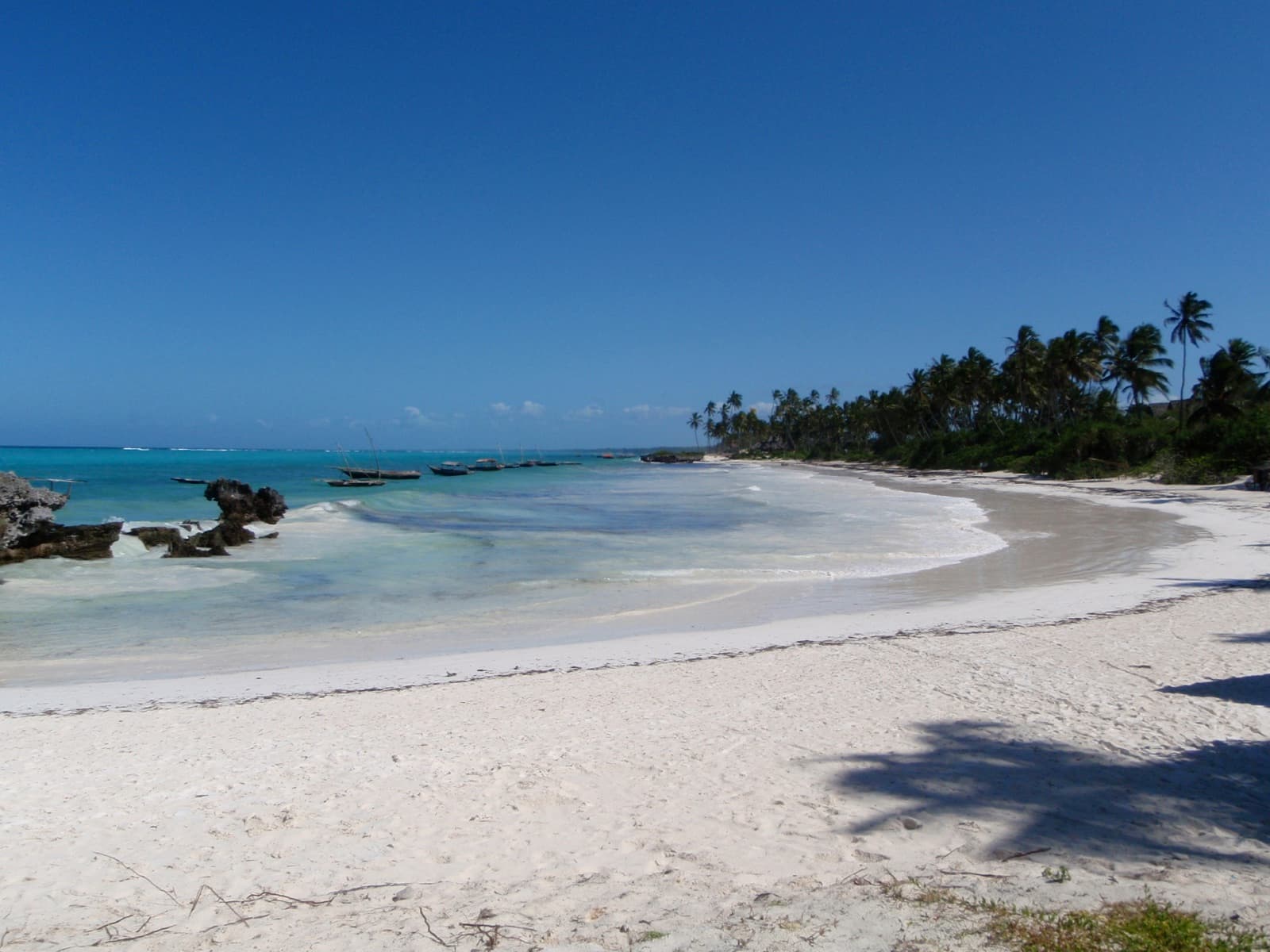
East coast — Paje & Jambiani. The famous kitesurfing coast (June–September is the season). Beautiful when the tide is in; low tide exposes a long flat seagrass plain you walk across to reach the water. Quieter and more local than the north. Paje is the kite hub; Jambiani is more village-y.
Northeast — Matemwe. Coral-fringed coast with good snorkelling access to the outer reef. Quieter than Nungwi but the tide patterns are similar to the east — check before booking.
Southwest — Kizimkazi. Famous for dolphin tours (humpback and bottlenose dolphins are resident). The dolphin trips have been criticised for chasing pods — choose an operator that keeps a respectful distance.
Stone Town as a base. The cheapest accommodation and the only meaningful cultural sightseeing. Most travellers spend 1–2 nights here and the rest of the trip on a beach. See where to stay on Zanzibar for the trade-offs by area.
What to see and do
Stone Town walking tour. A UNESCO-listed maze of narrow alleys, carved wooden doors, Arabic-style balconies, mosques, and the old Sultan's Palace area. The Anglican Cathedral was built on the site of the last open-air slave market in the world. A guided tour (2–3 hours, ~$25–40/person) is worth the cost — the layers of history are easy to miss without context. Note: House of Wonders remains closed for restoration in 2026; ask your guide what's currently accessible before booking.
Spice farm tour. Zanzibar was historically the world's leading clove producer. Half-day spice tours from Stone Town run around $25–40 per person. You walk through growing vanilla, cinnamon, black pepper, lemongrass, turmeric, and cloves with a local guide.
Mnemba Atoll snorkelling. Protected marine reserve off the northeast coast, the best snorkelling site on the island. Day trips from Matemwe, Nungwi, or Kendwa run around $50–80 including the boat. Mnemba conservation fee: $5–10 per person on top, sometimes bundled by the operator (always confirm).
Diving. Operators in Nungwi, Kendwa, Paje, and Matemwe run daily dives. A two-tank dive runs about $80–120 depending on site. Reef condition is decent but not Maldives-tier; if you're a serious diver, add a few nights on Pemba.
Forodhani Night Market. The waterfront food market in Stone Town, open every evening — grilled seafood, Zanzibar pizza, sugarcane juice. Eat there at least once; prices are reasonable and the food is genuinely good.
Jozani Forest. The only place in the world to see the endemic Zanzibar red colobus monkey. Half-day trip from Stone Town, entry around $10/person.