Ndutu Calving Season: Best Time, Where & How Many Days
Planning7 min read·

Ndutu Calving Season: Best Time, Where & How Many Days

The Ndutu calving season peaks in February, when thousands of wildebeest are born daily on the southern Serengeti plains. When to go, where, and how long.

SE

By Safarani editorial team

Last fact-checked 12 October 2026

The Ndutu calving season is the few weeks each year when around half a million wildebeest give birth on the short-grass plains of southern Tanzania. It runs from late January to March and peaks in February, when roughly 8,000 calves are born a day and the plains fill with the lions, cheetahs and hyenas that follow them. This guide covers exactly when to go, where Ndutu is, how many days you need, and how it compares to the famous river crossings later in the year.

When is the Ndutu calving season?

The Ndutu calving season runs from late January to March and peaks in February. In a span of about three weeks, roughly 500,000 wildebeest calves are born on the short-grass plains of Ndutu and the southern Serengeti, with as many as 8,000 born on a single day. February is the single best month, with the highest concentration of newborns and the heaviest predator activity anywhere in Africa.

Late January to mid-February is the sweet spot for peak births and hunting. Late February into early March still offers excellent calf and predator sightings as the season winds down.

Month by month: January, February, March

January. The herds move onto the southern plains as the short rains green the grass. The first calves appear from late January, but numbers are still building. Expect fewer vehicles and lower green-season rates.

February. The peak. The bulk of the 500,000 calves arrive, usually in the first three weeks, and predator action is at its most intense. If you want the spectacle at full volume, this is the month to book.

March. Calving tails off, but the plains are still full of young calves and the predators that follow them. The grass is longer and greener, and the herds slowly begin drifting north.

Where exactly is Ndutu?

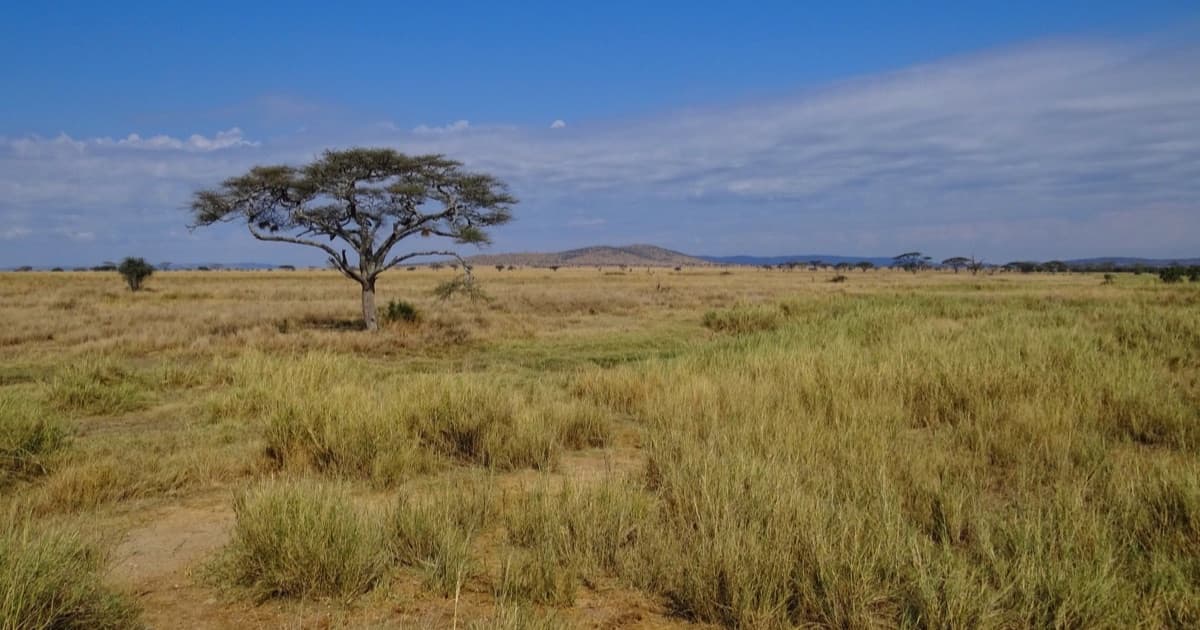
Ndutu is not a single park. It is an area of short-grass plains that sits inside the Ngorongoro Conservation Area, right where it borders the southern Serengeti. The herds move freely across that boundary, which is why a calving-season safari is usually based around Ndutu rather than the central Serengeti.

The nutrient-rich volcanic soil and short grass are exactly what wildebeest need to calve, which is why they return to the same plains every year.

Why calving season has the best predator action

Half a million vulnerable newborns in one place draws the densest predator population in Africa. The western Ngorongoro Conservation Area and the southern Serengeti hold huge lion prides, large hyena clans, and the wide open plains that cheetahs hunt best.

Guides often report several hunts in a single morning drive. For big-cat photography, few times or places in Africa match Ndutu in February.

Calving season vs the river crossings

These are two different events, months apart. The dramatic Mara River crossings happen in the northern Serengeti between roughly July and October. The calving happens in the south between late January and March. You cannot see both on the same trip.

Calving season trades the crossings for newborns, intense predator action, green scenery, fewer crowds and lower green-season prices. For the full year-round picture, see our Great Migration month-by-month guide.

How many days do you need?

Plan on three to four days based in the Ndutu area. The herds spread across a wide plain and move daily, so more time means more chances at a big predator sighting or a birth.

A typical trip pairs two to three nights at Ndutu with the Ngorongoro Crater and Tarangire, which works well because they sit close together in the south at that time of year. The Serengeti itself is the wider stage the herds move across.

Planning a calving-season safari

Calving season falls in Tanzania's green season, so daily rates are lower than the July to October peak. Estimate your trip with the safari cost calculator, read the best time to visit Tanzania for the full seasonal picture, and when your dates are set, get matched with verified operators who run Ndutu departures in February.

What does a calving-season safari cost?

Calving season is green season, so it is cheaper than the July to October crossing months. As a rough guide per person per day, all-inclusive:

TierPer person / day
Budget (camping, shared 4x4)$200 to $350
Mid-range (lodges and tented camps)$400 to $650
Luxury (premium Ndutu camps)$750 to $1,500+

A typical four to six day Ndutu and Ngorongoro trip runs from roughly $1,400 per person at the budget end. Park and conservation fees are included in operator quotes but are set by the government and do not discount off-peak. See the full 2026 TANAPA fees and tariffs for the current figures.

Tips for a calving-season safari

  • Target February, and book well ahead. The best Ndutu camps are small and sell out a year in advance for the peak weeks.
  • Stay in the Ndutu area, not the central Serengeti. It puts you on the plains at first light when predators hunt.
  • Give it three to four days. The herds move daily, so a single day is a gamble.
  • Pair it with the Ngorongoro Crater. It is close by and a strong second act if the plains are quiet.
  • Bring a long lens. Predator action usually happens at distance across open plains.
  • Choose an operator that runs February departures and ask how many days they base at Ndutu. Compare verified operators before you commit.

Get a real quote from a verified operator

Browse verified Tanzania operators across the Northern and Southern circuits. Message them directly via WhatsApp — no booking fees.

Browse operators →

Frequently asked

When is the wildebeest calving season in Tanzania?
Late January to March, peaking in February, on the Ndutu and southern Serengeti plains. Around 500,000 calves are born in roughly three weeks, with up to 8,000 in a single day at the peak.
Is January or February better for the calving season?
February. Early calves appear from late January, but the bulk of births and the most intense predator activity come in February, especially the first three weeks. Late January to mid-February is the sweet spot.
Where is Ndutu?
Ndutu is an area of short-grass plains inside the Ngorongoro Conservation Area, on the border with the southern Serengeti. The herds move across the boundary, so calving-season safaris are based around Ndutu rather than the central Serengeti.
How many days do you need for the calving season?
Three to four days based in the Ndutu area. The herds spread across a wide plain and move daily, so more time improves your odds of seeing a birth or a big predator sighting.
Can you see the river crossings during calving season?
No. The Mara River crossings happen in the northern Serengeti between about July and October. The calving happens in the south between late January and March, so the two cannot be combined on one trip.
Is calving season a good time for a first safari?
Yes. It offers huge concentrations of animals, dramatic predator action, green scenery and lower green-season prices, which makes it one of the best-value times for a first Tanzania safari.
Last updated · 12 October 2026. Verified by the Safarani editorial team.
Spot something wrong? Tell us →
All guides →