
Weather in February
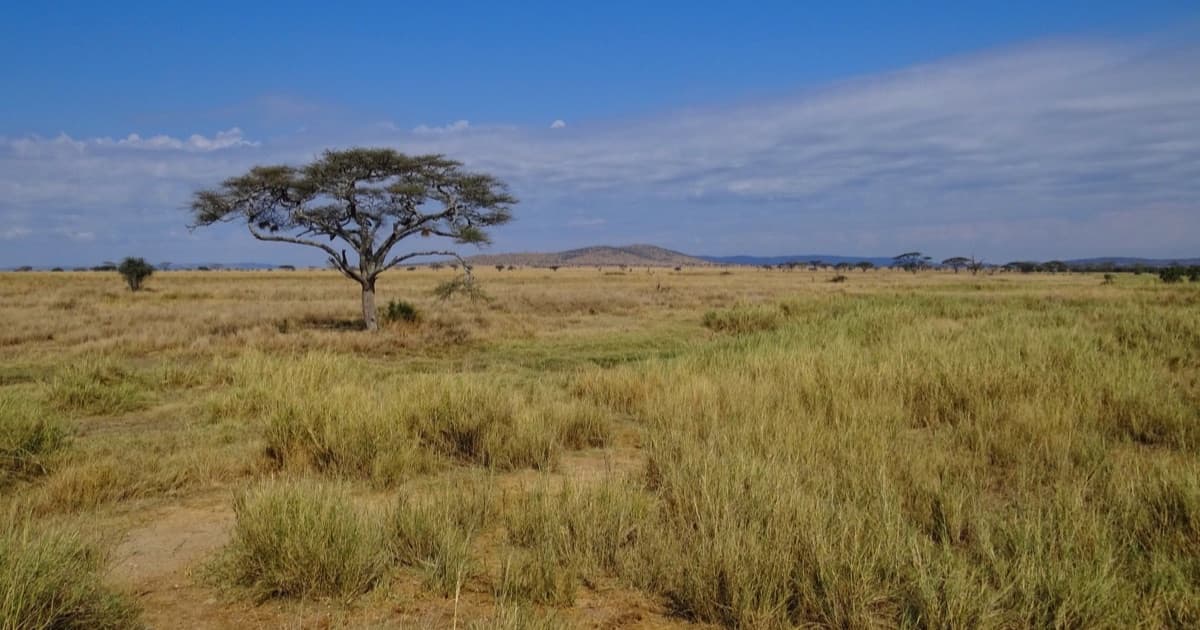
February is hot and dry in most of Tanzania. Daytime temperatures reach 28–32°C (82–90°F) in the Serengeti and Tarangire, dropping to 16–18°C overnight. Ngorongoro Crater is cooler — fleece needed for early drives. The short rains have ended; the long rains haven't started.
This is one of the most stable weather windows of the year. Bright, clear skies most days, occasional brief afternoon thundershowers in the second half of the month.
Wildlife: peak calving season
February is the heart of the calving season. From roughly 25 January to 25 February, the wildebeest herds give birth on the short-grass plains of the southern Serengeti (Ndutu region) and Ngorongoro Conservation Area. Peak births: 1–20 February, with up to 8,000 calves born per day.
The result is the most concentrated predator activity in Tanzania: lions hunting in coordinated groups, cheetah on open ground (Ndutu is one of the best cheetah-viewing locations on earth), spotted hyena, and jackal. New calves stand within minutes of birth and run within an hour — the survival drama is intense.
Other parks: Tarangire is good but past peak. Ngorongoro Crater is excellent year-round. Lake Manyara sees flamingo flocks. Ruaha and Nyerere remain dry and excellent.
Best parks for February
- Southern Serengeti / Ndutu — non-negotiable for the calving season
- Ngorongoro Crater — Big Five in one day, including reliable black rhino sightings
- Tarangire — solid but secondary to Ndutu this month
- Ruaha — excellent for travellers who want a quieter southern circuit option
Crowds and costs
February sees moderate crowds — busier than April–May but much quieter than July–August. The Ndutu region is the only area that gets concentrated traffic. Camps in central Serengeti and Tarangire are relatively quiet.
Prices sit at solid shoulder rates: roughly 25–30% below August equivalents. February is one of the best months for value-conscious travellers who refuse to compromise on wildlife.
What to pack
Light layers in neutral colours, a fleece for cold Ngorongoro mornings, brimmed hat, high-SPF sunscreen, sunglasses, binoculars, and a long camera lens (200–400mm minimum) for distance shots of predator action. Closed walking shoes. Light rain jacket as a precaution.
Booking lead time
For Ndutu camps in February, book 4–6 months ahead. The best mobile camps that follow the calving herds (the small camps that physically relocate as the wildebeest move) sell out earliest — they're the gold standard for February safaris.
See also: Tanzania safari in January · March · full month-by-month comparison.