
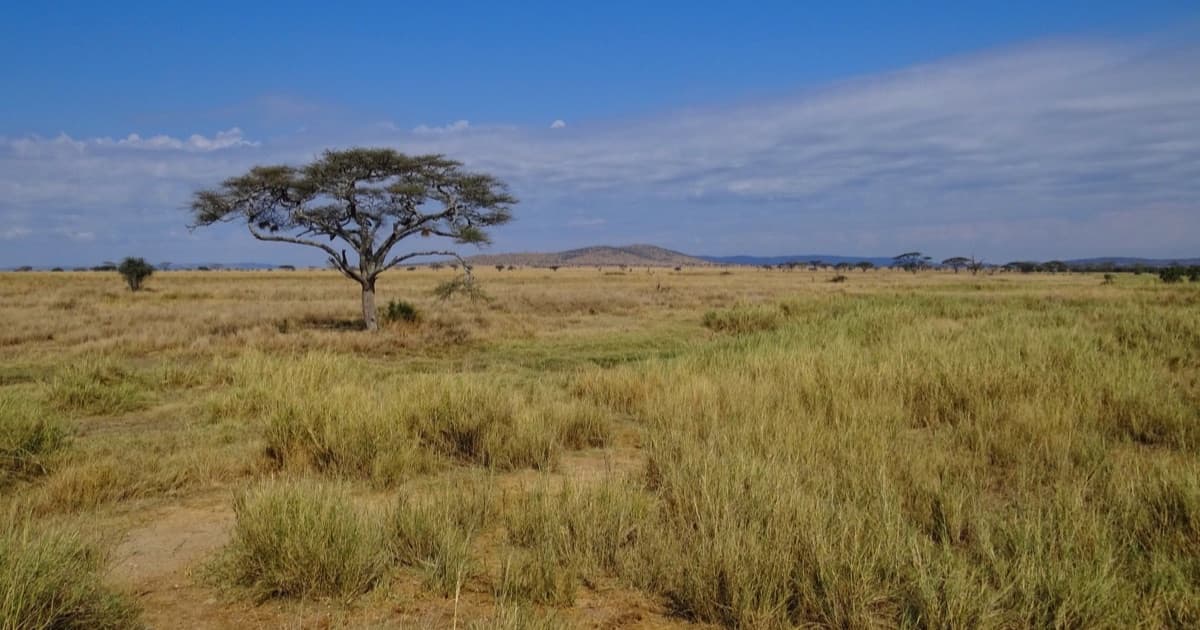
Weather in January
January is hot and mostly dry in the northern circuit. Daytime temperatures reach 27–30°C (80–86°F) in the Serengeti and Tarangire, dropping to 14–16°C overnight. Ngorongoro Crater sits at 2,400m elevation — early-morning game drives need a fleece. The short rains have usually ended by mid-month. Brief afternoon showers are possible but rarely disrupt morning drives.
The coast and Zanzibar are hot and humid, in the high 20s during the day with sea temperatures around 28°C.
Wildlife and the Great Migration
The Great Migration moves into the southern Serengeti's Ndutu plains and Ngorongoro Conservation Area in late December and remains there through February. Calving season starts mid-January and peaks 1–20 February: up to 8,000 wildebeest calves born per day on the short-grass plains.
Predators concentrate around the herds — lion, cheetah, hyena, and jackal are all easier to see in January than at any other time. The Serengeti's southern Ndutu region is the place to be.
In other parks: Tarangire elephants have dispersed across the wider ecosystem as water is widely available. Ngorongoro Crater game is consistent year-round. Ruaha and Nyerere in the south are excellent — drier than usual at this time of year.
Best parks for January
- Southern Serengeti / Ndutu — for the calving season, this is the standout park of the month
- Ngorongoro Crater — Big Five sightings reliable year-round, vegetation is short
- Tarangire — good but not at peak elephant density (that's October)
- Lake Manyara — flamingos at the lake, migratory birds in large numbers
- Ruaha and Nyerere — drier-than-usual southern parks, near-empty of tourists
Crowds and costs
The first week of January (New Year) is peak-priced — lodges charge August-equivalent rates and many are fully booked from October onwards.
From January 7 onwards, prices drop sharply. Mid-January to early February is one of the best-value windows for a quality Tanzania safari. Lodges that charge $550/night in August often run $300–400/night in mid-January.
Crowds are also significantly lower in mid-January than in July–August — the Ndutu calving plains are far less busy than the August Mara crossings.
For specific cost ranges by tier, see the Tanzania safari cost breakdown.
What to pack
Light layers in neutral colours, a fleece for cold Ngorongoro mornings, a brimmed hat, sunscreen, sunglasses, binoculars, and closed walking shoes. A light rain jacket for the occasional afternoon shower. If you're combining with Zanzibar, swimwear and modest clothing for Stone Town.
Compare January with other months
January suits travellers who want the Ndutu calving spectacle, low crowds, and warm dry weather. If you specifically want the famous Mara River crossings, you'll need to come in July–September. For the absolute lowest prices, look at April–May (long rains). See the best time to visit Tanzania guide for full comparison.
See also: Tanzania safari in December · February · full month-by-month comparison.