
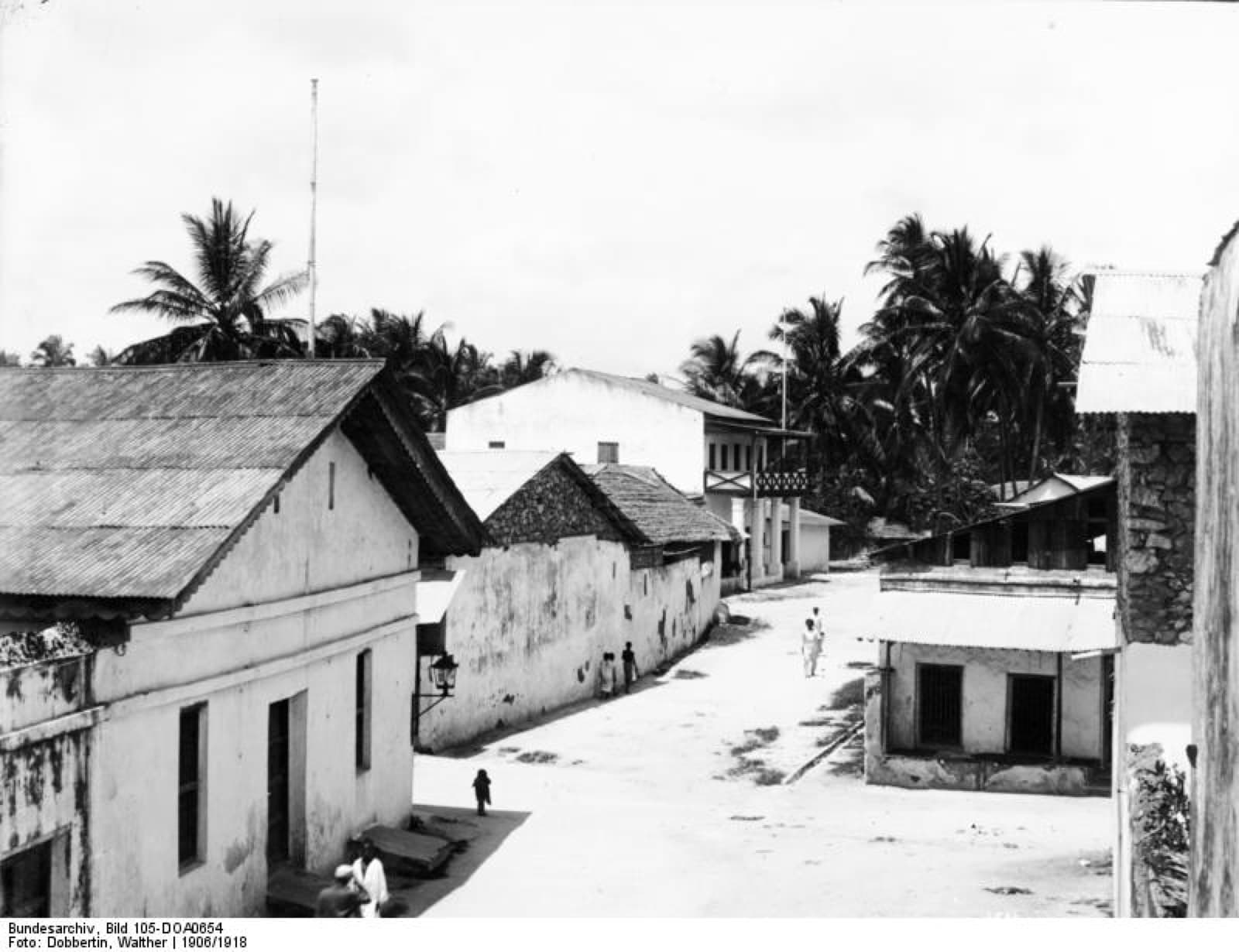
What does Bagamoyo mean and why was it important?
"Bagamoyo" translates as "lay down your heart" (bwaga = lay down, moyo = heart) — a phrase attributed to enslaved Africans arriving at the coast after weeks or months of forced march from the interior, knowing they would cross to Zanzibar and likely never return home.
Bagamoyo was the most important coastal terminus of the interior slave trade from approximately 1800 to 1870. Arab and Swahili slavers brought captives from as far as modern-day Democratic Republic of Congo, Rwanda, and Zambia — an overland journey of weeks or months in chains. At Bagamoyo, the enslaved were held in compounds called caravans before being loaded onto dhows for Zanzibar's slave market.
The town was also the starting point for European expeditions into East Africa. David Livingstone's body was brought here in 1874 after his death at Lake Bangweulu — carried 1,500km by his loyal companions Susi and Chuma, embalmed by local missionaries, and transported to England for burial in Westminster Abbey. A plaque in the grounds of the Catholic Mission marks where his body lay.
How to get to Bagamoyo from Dar es Salaam
By road (recommended):
- Distance: 70km north of Dar es Salaam on the coastal road
- By taxi from Dar: 1.5–2 hours, TZS 80,000–150,000 ($32–$60) one way. Negotiate for a return with waiting time.
- By dala-dala (shared minibus): Take a dala-dala from Mwenge terminal (Dar) to Bagamoyo. Multiple departures; journey 2–3 hours; TZS 3,500–5,000. The cheapest option, though slow.
- By private hire with driver: $70–120 for a full-day driver-guide from Dar; book through your Dar hotel or a tour operator.
By ferry (seasonal): Occasional speedboat services between Dar port and Bagamoyo operate — check current schedules on arrival as services are irregular.
Best option: Book a day trip through a Dar tour operator ($80–130/person including transport and guided tour) — most convenient and includes a guide who can contextualise the history.
Best time to visit Bagamoyo
Bagamoyo can be visited year-round. The historical sites are roofed or sufficiently robust to visit in rain. However:
June–October (dry season): Best. Clear skies, comfortable temperatures (26–30°C), and beach conditions are ideal if combining with coastal swimming.
December–February: Second dry season. Good visiting conditions.
March–May: Long rains. Some coastal roads can flood. The ruins are still accessible but beach conditions are poor.
What to see in Bagamoyo — the key historical sites
The Catholic Mission (Holy Ghost Fathers Mission): Founded in 1868, this is the oldest surviving Catholic mission in East Africa. The mission church, the "Livingstone Church" (where Livingstone's body lay for a night before shipment to Zanzibar), the old slave compound (now a small school), and a museum of East African missionary history are all on-site. The museum holds artifacts from the caravan trade, slave trade-era objects, and Livingstone memorabilia. Entry: $5.
The Old Customs House and Arab Quarter: The waterfront area contains the ruins of the German customs house, Arab merchant houses, and the old dhow beach where caravans embarked. The architecture — carved wooden doors, coral-stone walls — evokes the Arab trading city this once was.
Kaole Ruins (5km south of Bagamoyo): The oldest known mosque on the Tanzania mainland — dating to the 13th century — plus an adjacent tomb of a local ruler. The Kaole site predates Bagamoyo as a settlement and demonstrates the antiquity of Islamic presence on this coast. Small museum on-site. Entry: $5.
German Boma (Administrative Building): The first German colonial administrative headquarters in East Africa, built 1890. An impressive colonial structure that served as the capital of German East Africa before the capital was moved to Dar es Salaam in 1891. Now houses a museum.
Caravan Serai (restored): A partially restored example of the compound where enslaved people were held before the dhow crossing to Zanzibar. One of the most sombre and significant sites in Bagamoyo — the grounding reality of what the caravan trade meant in human terms.
Bagamoyo beach
The Bagamoyo waterfront has a long sandy beach — peaceful and far less crowded than Dar's urban beaches. Several beach bars and simple restaurants serve grilled fish and local food. Swimming is generally safe but check current conditions with locals (currents can be strong at certain tides).