
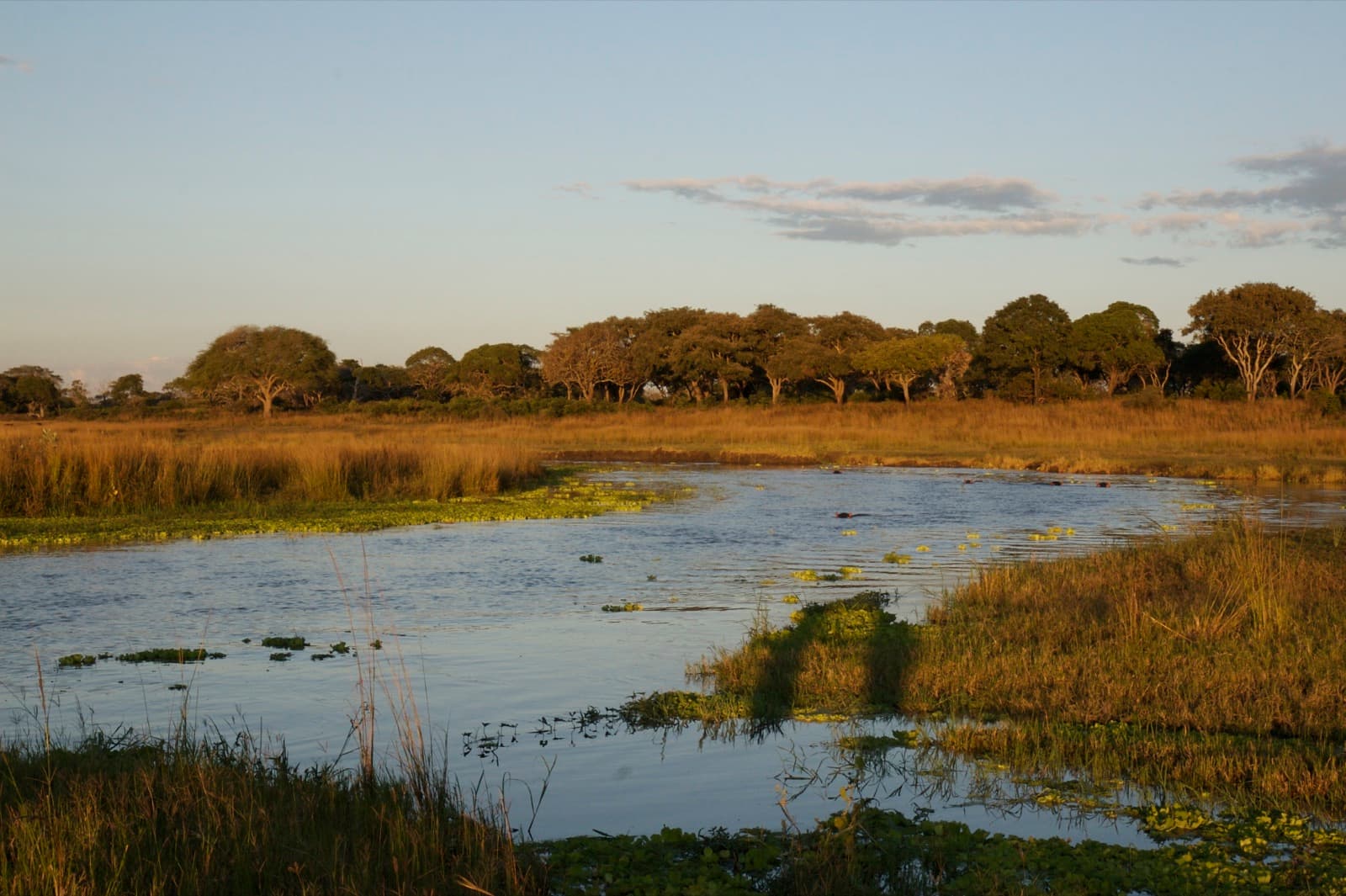
Why is Katavi National Park so remote?
Katavi is in Tanzania's Katavi Region in the far west — 840 km from Dar es Salaam and approximately 500 km from the nearest major tourist hub. There are no major towns within 100 km of the park. The TANZAM road passes through the region but is hours from the park gate.
The remoteness is not incidental — it is the product. The park sees so few visitors because access requires a charter flight or a very long, rough overland journey. The camps that operate there cater to a small number of guests per year. The result is a wilderness experience with a quality-to-visitor ratio unmatched in any other Tanzanian park.
What makes Katavi's hippo and crocodile spectacle unique?
The hippo concentration. In September, when the floodplain lakes have reduced to shallow mud pools, 400–500 hippos occupy the remaining water in a single pool. This density — hippos stacked three deep in places — is a spectacle unlike anything at the Serengeti, Ngorongoro, or any other mainstream safari destination.
Crocodile aestivation. In extreme dry season, some Katavi crocodiles enter dens (caves and depressions near the lake shore) in a state of reduced metabolic activity — something rarely documented and observable outside western Tanzania. Guides know the den locations and can show visitors this unusual behaviour.
Buffalo herds. Katavi has some of Africa's largest buffalo aggregations — thousands of animals moving across the floodplain. Buffalo herds of 1,000+ animals are not unusual.
How to get to Katavi National Park
By charter flight (the only realistic option)
Dar es Salaam or Arusha → Sitalike airstrip (inside the park). Air Excel, Coastal Aviation, and similar operators run this route. Flight time from Dar: approximately 2.5–3 hours. From Arusha: similar.
Cost: $600–900/person return from Dar or Arusha — this is the dominant cost item.
Most visitors combine Katavi with Mahale in a western Tanzania circuit — one charter flight connects the two parks (30 minutes by air). This is by far the most efficient and popular itinerary for the western parks.
By road (the extreme option)
A gruelling 2-day drive from Dar via Mbeya and Sumbawanga — only suitable for serious overlanders with their own well-equipped 4WD.
Best time to visit Katavi
June–October (dry season only)
The hippo and crocodile spectacle is a dry-season phenomenon. This is when Katavi is open for tourism. All permanent camps close in November and remain closed through the wet season.
August–October: the peak hippo experience. The floodplain lakes are at their lowest. Hippo concentrations are highest. Predator activity around the hippo pools — lions, hyenas, wild dogs — is intense.
June–July: Early dry season. The lakes are still relatively large. Hippos are visible but less concentrated. Wild dog denning season — excellent pup sightings if a pack is resident.
What wildlife will you see in Katavi?
Hippos: 400–500+ in peak dry season. The defining experience.
Lions: Large prides attracted by the high prey density. Katavi lions are notably less habituated to vehicles than northern circuit lions — encounters feel wilder and more genuine.
Buffalo: Herds of 500–1,000+ animals on the floodplain.
African wild dogs: Katavi has a documented wild dog population. June–July denning gives the best pup-sighting opportunities.
Crocodiles: Very large Nile crocodiles in the rivers and lakes. Aestivation dens visible in extreme dry season.
Birds (400+ species): The floodplain and adjacent woodland support extraordinary bird diversity, including several species rare in the northern parks.