
Why is Lake Nyasa famous for cichlids?
Lake Nyasa (Malawi) holds between 800 and 1,000 cichlid species — more than any other lake in the world. Approximately 90% of these species are found nowhere else. The lake's cichlids evolved in spectacular parallel diversity: the rocky shores at different locations host distinct communities of species, each evolving in semi-isolation as a result of the lake's ancient history (Lake Nyasa is over 1 million years old).
The cichlid diversity visible at Matema Beach is comparable to what a snorkeller would see on a tropical coral reef — except that these are freshwater fish in a crystal-clear mountain lake. Mbuna (rock-dwelling cichlids) in blues, yellows, and oranges dart between boulders in 2–10 metres of water. Utaka (open-water cichlids) school in silver clouds. Predatory cichlids patrol deeper water.
How to get to Matema Beach and Lake Nyasa Tanzania
Matema is the most remote destination in this guide. Getting there requires commitment, but the effort is rewarded.
From Dar es Salaam:
- Fly or bus to Mbeya (by bus: 10–12 hours, TZS 35,000–50,000; by air: 1.5 hours, $150–250)
- From Mbeya, take a bus or shared vehicle to Kyela (2 hours, TZS 8,000–12,000)
- From Kyela, take a vehicle (pick-up truck or dalla-dalla) to Matema (1 hour, TZS 5,000–8,000)
- Total from Mbeya: 3–4 hours
The MV Iringa/Songea Lake Ferry: Tanzania Shipping Corporation operates lake ferries between Itungi Port (near Kyela) and ports on the Tanzanian shore, including Liuli and Mbamba Bay. The ferry schedule is infrequent (2–3 times per week) and unreliable — check current schedules at Itungi Port. The ferry journey down the lake shore is an adventure in itself and offers extraordinary mountain scenery.
Self-drive: A 4WD is essential for the road from Kyela to Matema, which deteriorates significantly in rainy season. In dry season, a high-clearance vehicle is manageable.
Best time to visit Lake Nyasa Tanzania
May–October (dry season): Best time. Lake visibility peaks (15–25m), roads are accessible, and weather is stable. June–August is coolest (20–25°C); September–October is warmer.
November–January: Short rains bring afternoon showers but the lake remains calm and clear. A good time for quieter conditions and lower prices.
February–March: Hot and mostly dry on the lake shore. Excellent swimming and snorkelling.
April–May: Long rains. Roads to Matema can flood. Lake ferry services may be disrupted. Not recommended unless specifically seeking solitude.
Matema Beach — what to expect
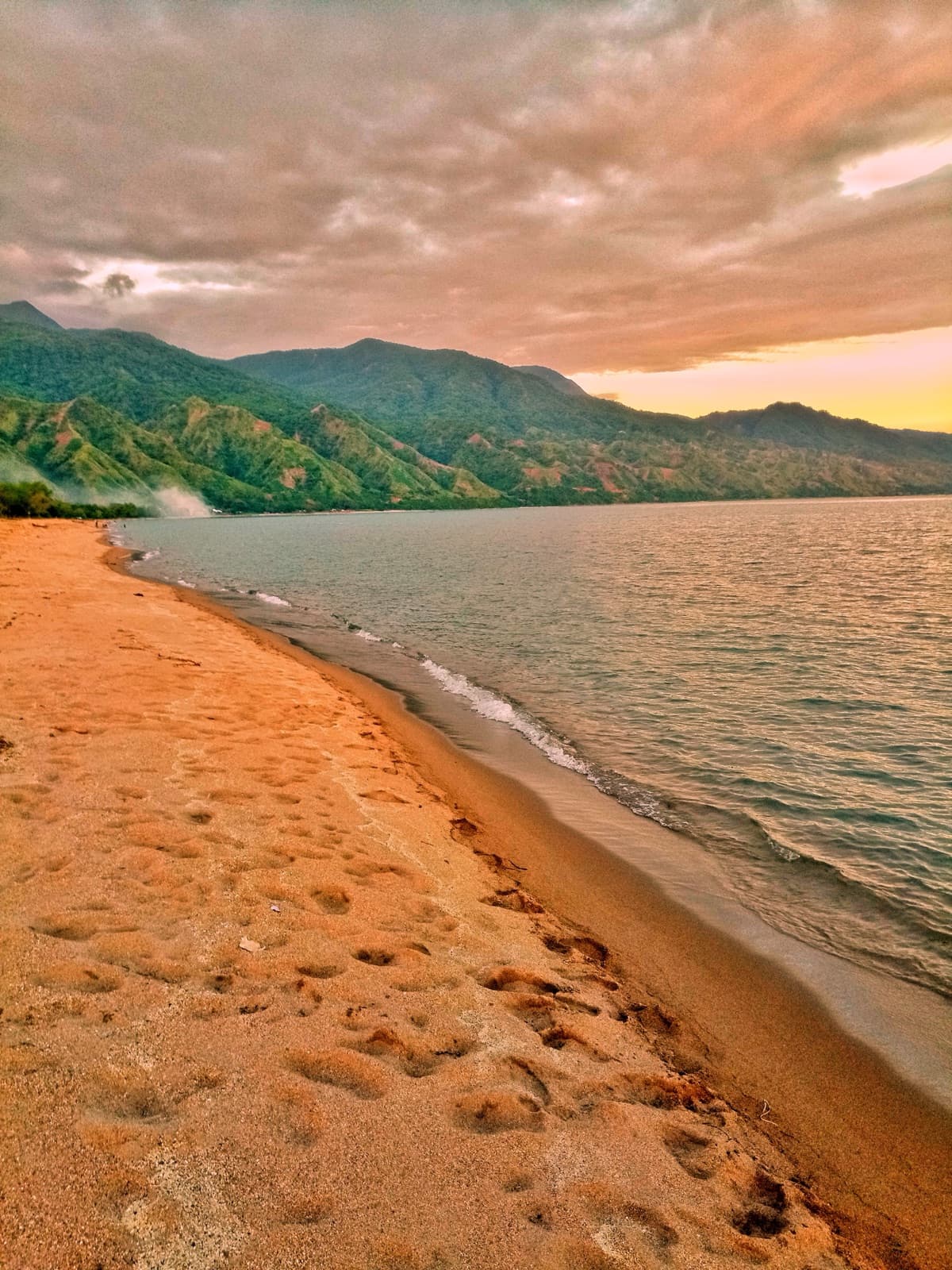
Matema is a small, unpretentious fishing village at the base of the Livingstone Mountains. The beach itself is several kilometres of white sand backed by palms and mountain scenery. The water is extraordinarily clear — you can see your feet in 3 metres of water with perfect colour rendering.
Snorkelling: The rocky outcrops directly off Matema Beach are packed with cichlids. A mask, snorkel, and fins (some lodges rent these) is all you need. Recommended sites are a 10-minute swim from the shore — ask lodge staff to point out the best rocky areas.
Swimming: Lake Nyasa is generally considered safe for swimming at Matema — it is a large, clear, well-oxygenated lake with minimal bilharzia risk at this northern location. Confirm with lodge staff before swimming in any new area. Crocodiles exist in the Tanzanian lake section but are rare near Matema's open beach.
Hiking: The Livingstone Mountains rise dramatically behind Matema. Day hikes to viewpoints above the lake (500–1,000m ascent) offer extraordinary views. Local guides available from the village for TZS 15,000–25,000/day.
Lake ferry trip: If the MV ferry schedule aligns, a one-way journey along the lake shore (Matema to Mbamba Bay or Liuli, 4–8 hours) through the shadow of the Livingstone Mountains is one of Tanzania's most spectacular transport experiences.
Is it safe to swim in Lake Nyasa Tanzania?
Lake Nyasa has historically low bilharzia (schistosomiasis) risk compared to other Tanzanian lakes, but zero-risk areas don't exist in any African freshwater. The general guidance:
- Swim in open water away from reeds and shallow vegetation
- Avoid slow-moving or stagnant bays
- The open beach at Matema is considered lower risk
- Consult a travel health clinic before your trip for current risk assessment
Crocodile presence: Nile crocodiles exist in Lake Nyasa, particularly in sheltered inlets and river mouths. The open beach at Matema is not a known crocodile area but confirm locally before swimming in unfamiliar spots.