
Which is better, Ruaha or Nyerere?
It depends entirely on what you want from a safari. If your priority is predator action, big elephant herds, and that quintessential dry-bush, baobab-and-lion experience, Ruaha wins clearly. If you want to combine boat safaris on the Rufiji, walking safaris through wilderness, and easier access from Dar es Salaam, Nyerere is the better choice.
Both parks are vastly bigger than anything on the northern circuit. Ruaha covers 20,226 km² — larger than Switzerland's land area. Nyerere is 30,893 km², making it Africa's largest national park. The result in both: very few vehicles, real wilderness feel, and prices that are typically lower than equivalent Serengeti camps for the same quality of experience.
What makes Ruaha different
Ruaha National Park is the predator capital of Tanzania. The park supports approximately 10% of the world's lion population and one of the largest African wild dog populations on the continent. Cheetah, leopard, and spotted hyena are all common. If you're a repeat safari traveller wanting bigger cats and harder-to-see species, Ruaha is genuinely world-class.
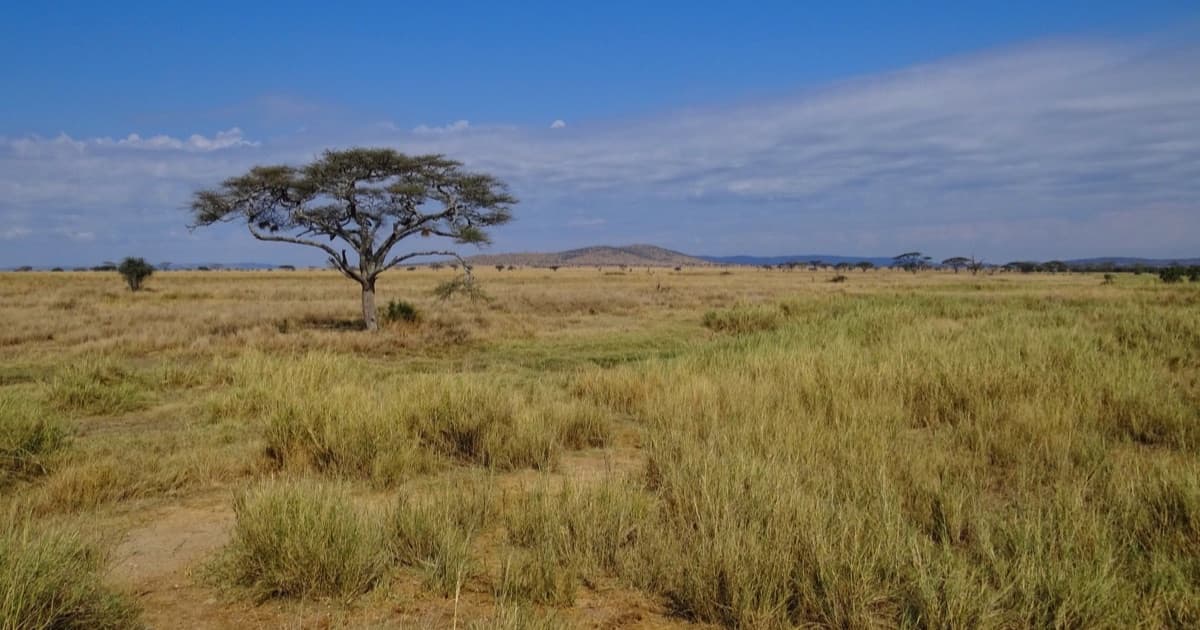
The landscape is dramatic — rolling plains, granite kopjes, and groves of baobab trees that give the park its distinctive look. The Great Ruaha River is the lifeline during the dry season, and game viewing along its banks from August to October is exceptional.
Ruaha's elephant population is one of East Africa's largest — over 12,000 animals. Herds of 50–100 are common around the river during the dry season.
The park is fly-in only for most visitors. Coastal Aviation and Auric Air run daily flights from Dar es Salaam (2 hours) and from Arusha via Selous (3.5 hours). Driving is possible but takes a full day from Iringa.
What makes Nyerere different
Nyerere National Park — created in 2019 from the northern section of the former Selous Game Reserve — offers something no other Tanzanian park can: water-based safaris on a major African river. The Rufiji River flows through the park, expanding into lakes and channels that support hippos, crocodiles, fish eagles, and a year-round concentration of wildlife.
Three things you can do in Nyerere that you cannot do in Ruaha or anywhere on the northern circuit:
Boat safaris on the Rufiji River. Float past hippo pods, beach yourself near elephants drinking at the shore, and watch fish eagles dive. Most camps include a morning or afternoon boat outing as part of standard activities.
Walking safaris with armed scouts through genuine wilderness. The walks focus on tracks, scat, smaller wildlife, and the experience of being on foot rather than in a vehicle. The pace is slow and the perspective entirely different from a game drive.
Fly camping, where you sleep in basic dome tents under canvas in remote bush locations, walking out from the main camp for one or two nights. Most southern circuit operators offer this as an add-on.
Wildlife density is high but not as concentrated as Ruaha. Lions and wild dogs are present; elephants are abundant. The river attracts everything, which means game viewing along it is excellent year-round.
Which park wins for each type of traveller
Choose Ruaha if:
- You're a second or third-time safari traveller wanting harder species and predator density
- Big cats and African wild dogs are a priority
- You like dry, dramatic bush landscapes — baobabs, kopjes, golden grass
- You want fewer vehicles per sighting than even the southern average
Choose Nyerere if:
- It's your first southern Tanzania safari
- You want variety: boat safaris + walking + game drives in one trip
- You prefer green, water-rich landscapes over arid bush
- You're flying from Dar es Salaam and want shorter flight times
Visit both if:
- You have 7+ days in the south
- You want a complete southern circuit experience
- Budget allows a 5-day combination (typical 2 nights Nyerere + 3 nights Ruaha)
How much time do you need?
Ruaha: Three nights minimum. The park is large enough that one full day is barely an introduction. Three nights lets you cover the Mwagusi and Mdonya Sand River areas plus the main Ruaha River drives. Four to five nights is ideal for second-time safari travellers.
Nyerere: Two to three nights minimum. Two nights covers one game drive day plus one boat-safari morning. Three nights adds a walking safari and a second boat outing.
Both together: Five to six nights total. A typical southern circuit flow: fly Dar → 2 nights Nyerere → fly to Ruaha → 3 nights Ruaha → fly back. Add 2 nights Zanzibar at the end for a 10-day trip — see our 10-Day Southern Safari itinerary.
What does each park cost?
Ruaha National Park: $30 per adult per day (non-resident). Nyerere National Park: $70 per adult per day (non-resident).
Both are significantly cheaper per day than Serengeti's $83 or Ngorongoro's full crater cost.
The real cost difference between the two is in flights and accommodation. Ruaha is further from Dar — flights cost around $500–600 return, vs $350–450 for Nyerere. Camps in Ruaha tend to be slightly higher priced because of remoteness and limited infrastructure.
A typical 5-day southern circuit (2 nights Nyerere + 3 nights Ruaha) costs $4,500–7,500 per person mid-range, all-inclusive — competitive with a 5-day northern circuit for a quieter, more exclusive experience.
For exact pricing, use the Safarani safari cost calculator.
When to go to each park
Ruaha dry season (June–October): The single best window. Wildlife concentrates along the Ruaha River, predator activity peaks, and roads are at their best. The end of the dry season (September–October) is when wild dog sightings are most reliable around denning sites.
Nyerere dry season (June–October): Excellent. River levels are at their lowest, animals concentrate around remaining water, and boat safaris reach their best.
Both in green season (November–April): Birding peaks for both parks (Ruaha hits 570+ species; Nyerere is similar). Many southern camps close from mid-March to late May for the long rains — confirm operator dates carefully.
The southern circuit's secret advantage: dry season here runs almost the same calendar as the northern circuit but with a fraction of the visitor numbers. You see the same calibre of wildlife with vastly fewer vehicles around each sighting.
Can you do a southern safari without flying?
Driving is possible but rarely worth it. Dar to Nyerere is 6–8 hours on a mix of tarmac and dirt. Dar to Ruaha is 10–12 hours and crosses two regions. The roads can become impassable in the rains.
Most southern circuit operators fly their guests in. The flights are scenic, save days of road time, and let you maximise game-viewing hours in the parks. If you want to drive, factor in two full transit days plus the cost of the vehicle.
The honest answer for first-timers
If this is your first ever safari, the northern circuit (Serengeti + Ngorongoro + Tarangire) is still the standard recommendation — more infrastructure, more famous wildlife, easier logistics. The southern circuit is where you go for trip two or three.
But if you're choosing the south for your first safari — for the boat safaris, the walking, the lower crowds — start with Nyerere. The variety of activities and the easier flight from Dar es Salaam make it the better introduction. Ruaha rewards travellers who already know what a safari feels like and want something quieter, drier, and predator-heavy.
Find verified southern-circuit operators on Safarani's operator directory and contact them directly via WhatsApp — no booking fees, no platform commissions.