
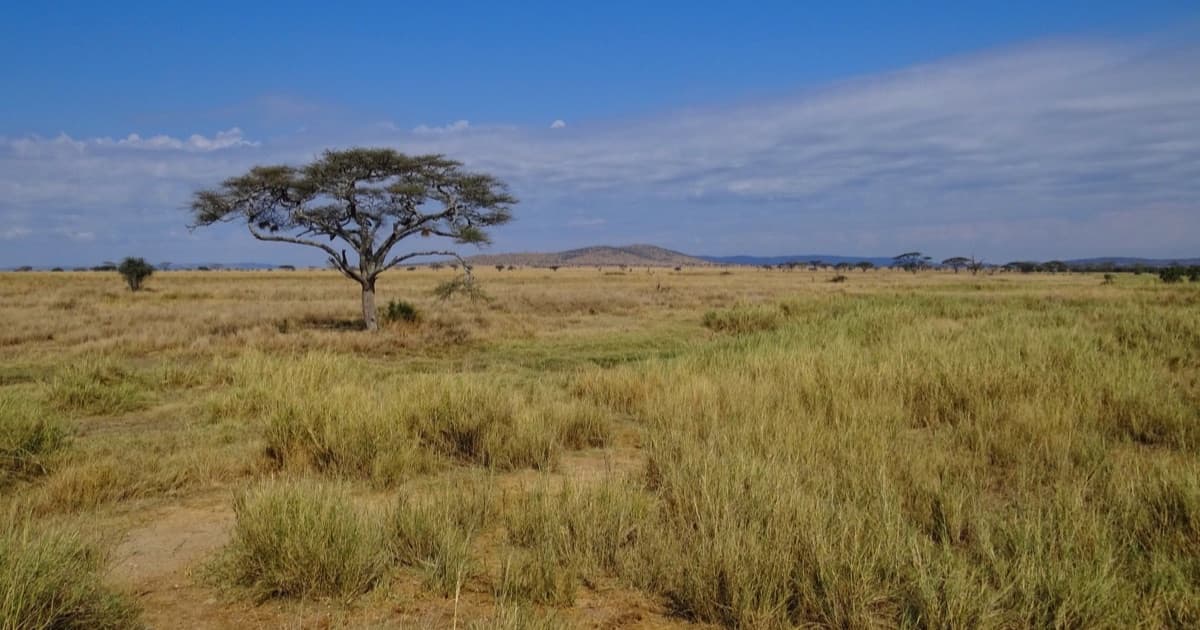
Which is better, Serengeti or Ruaha?
The Serengeti is better for first-time safari travellers and for anyone whose mental image of "African safari" is open grassland, big cats, and the Great Migration. It is the most predictable big-five park in Tanzania and the only place to witness the wildebeest crossings of the Mara River.
Ruaha is better for second-trip travellers, photographers, and anyone who wants a wilder, less-crowded experience. Ruaha is Tanzania's largest national park (20,226 km²) but receives a fraction of the Serengeti's visitors. The wildlife is excellent — over 12,000 elephants, huge predator populations, and unique species like greater kudu and roan antelope — and you'll often have sightings to yourself.
Both parks are top-tier wildlife destinations. The decision is mostly about crowds, cost, and what kind of safari experience you actually want.
What makes the Serengeti different
The Serengeti is the engine of Tanzania's tourism industry — and for good reason. The southern Serengeti plains host the wildebeest calving (January–March), the central Seronera Valley has year-round high game density, and the northern Mara region delivers the river crossings (July–October).
What the Serengeti offers:
- The Great Migration year-round (different sectors, different months)
- Highest lion density in Africa (estimated 3,000+)
- Predictable cheetah and leopard sightings
- Hot-air balloon safaris from multiple lodges
- Excellent road and air infrastructure
The downside: crowds. The central Serengeti can see 30+ vehicles at a major leopard or lion sighting in peak season. The Seronera area in July–October feels like a national park in the busy sense, not a wilderness.
The Serengeti is reached by flight from Arusha (1 hour) or a long drive across the northern circuit (8+ hours one-way).
What makes Ruaha different
Ruaha is the second-largest national park in Africa. The landscape is dominated by ancient baobab trees, sand rivers, and rocky kopjes — a wilder, more raw aesthetic than the Serengeti's manicured plains. The Great Ruaha River drives wildlife densities, especially in the dry season when animals concentrate at remaining water.
What Ruaha offers:
- Largest elephant population in East Africa — over 12,000
- One of the largest predator populations in Africa (10% of all African lions live here)
- Wild dogs (Africa's rarest large carnivore) — Ruaha has the densest population in Tanzania
- Almost no other vehicles — typical sightings are private
- Unique species: greater kudu, roan, sable antelope
The downside: it's harder to reach (charter flight or long drive from Iringa) and accommodation is more limited. Camps are smaller and more expensive per night, but you're paying for genuine wilderness.
The accommodation ranges from comfortable tented camps ($300–600/night) to high-end safari lodges ($800–1,500/night, all-inclusive).
Which park wins for each type of traveller
Choose the Serengeti if:
- It's your first African safari
- You want to see the Great Migration or river crossings
- You're prioritising big cats and predictable big-five sightings
- You want easier logistics and a wider lodge selection
- You're combining safari with Ngorongoro and Tarangire on a classic northern circuit
Choose Ruaha if:
- You've already done a northern Tanzania or Kenyan safari
- You want zero crowds at sightings
- You're an elephant lover or wildlife photographer
- You want to see wild dogs (best Tanzanian park for them)
- You're combining with Nyerere (formerly Selous) on a southern circuit
Visit both:
- A 12–14 day trip can combine northern Serengeti + southern Ruaha
- Best for second-trip travellers wanting both ends of the Tanzanian safari spectrum
How much time do you need?
Serengeti: Three to five nights minimum. Two nights barely covers transit and one game-driving day. Four nights lets you cover two different ecosystems within the park (e.g., Seronera + northern Mara). Most northern circuit itineraries allocate 3 nights.
Ruaha: Three to four nights minimum. The park is huge — driving distances between sectors are long — and you'll want at least two full days of game viewing. Adding a fly-in safari to Ruaha for less than 3 nights rarely justifies the flight cost.
What does each park cost?
Serengeti:
- Park entry: $84 per adult per day (peak season)
- Concession fees (varies by lodge): $35–80 per person per night
- Camp/lodge: $300–1,500 per person per night
Ruaha:
- Park entry: $35 per adult per day (significantly cheaper than Serengeti)
- No additional concession fee on most camps
- Camp/lodge: $400–1,200 per person per night
Typical all-inclusive trip cost (per person sharing, 4 nights mid-range):
- Serengeti: $2,400–4,000
- Ruaha: $2,000–3,500
The Serengeti tends to be more expensive overall because of higher park fees, peak-season concession charges, and the logistics of getting there.
For full cost planning, use the Safarani safari cost calculator.
When to go
Both parks: dry season (June–October) is best for game viewing. Wildlife concentrates around water, vegetation is sparse, and animal sightings are easiest.
Serengeti specifics:
- January–March: wildebeest calving in the southern plains
- April–May: long rains, fewer crowds, lower prices
- June: migration moves north through central Serengeti
- July–October: river crossings in the northern Mara
Ruaha specifics:
- June–November: peak game viewing, dry conditions
- December–March: green season, lush, birding peak (550+ species)
- April–May: most camps close for the rains
The honest answer for first-timers
For 80% of first-time Tanzania visitors, the Serengeti is the right answer. You'll see what you came to see, the logistics are easier, and you can combine with Ngorongoro and Tarangire on a 7–10 day northern circuit trip. The crowds are real but manageable if you avoid peak July and use a knowledgeable operator.
Ruaha is for travellers on their second safari, photographers who want clean compositions without other vehicles, and anyone specifically chasing elephants or wild dogs. It rewards the longer trip and higher remoteness with a fundamentally quieter, more wilderness-feeling safari.
Many returning Tanzania travellers describe Ruaha as their favourite — not because it's "better than" the Serengeti, but because it delivers something the Serengeti can't: solitude.
Find verified Tanzania operators running both circuits on Safarani's directory and message them directly via WhatsApp.