
What to know before you go
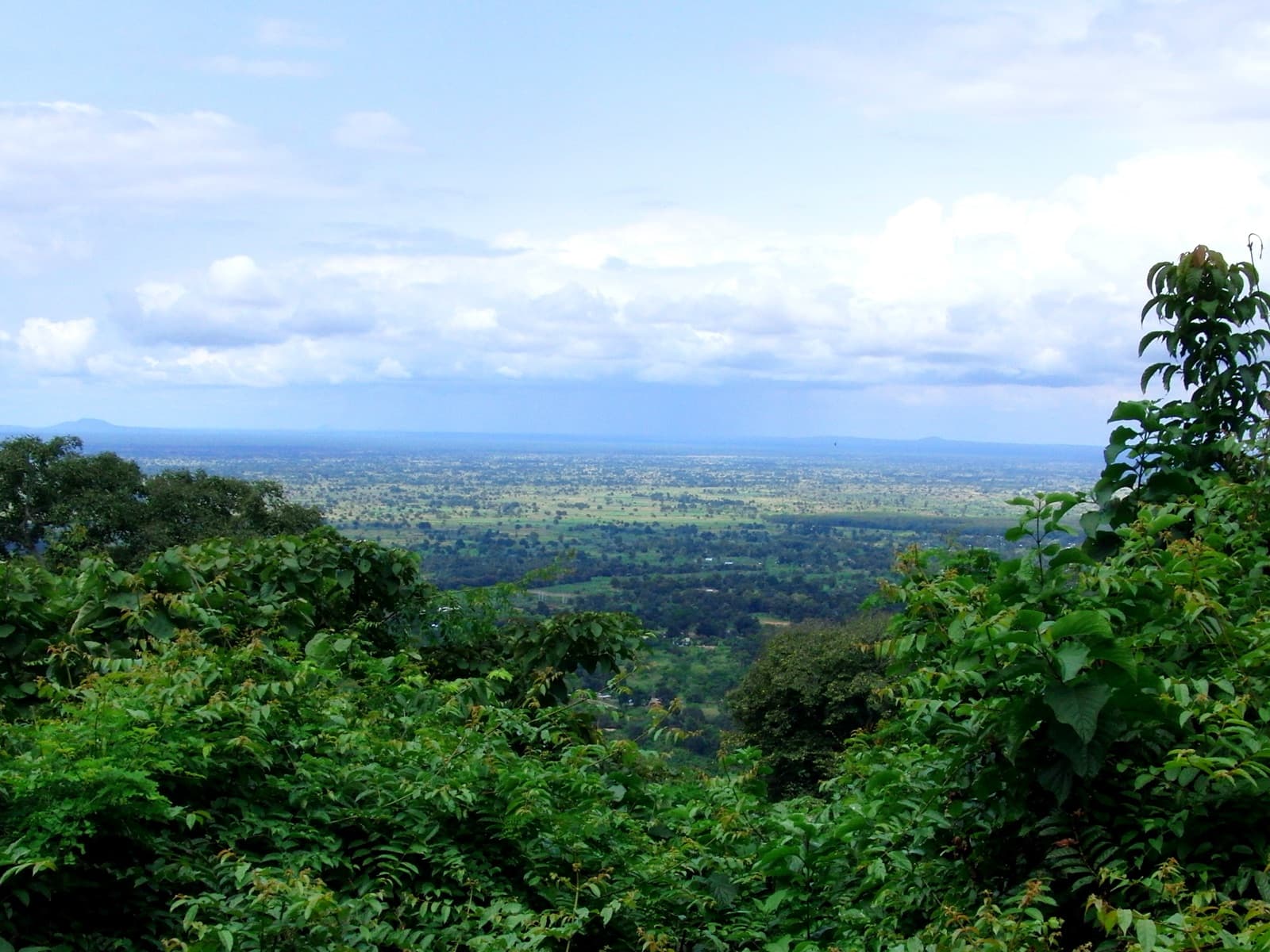
Udzungwa Mountains National Park covers 1,990 km² of montane forest in Kilosa District, Morogoro Region. It was gazetted in 1992 and protects the largest forest block of the Eastern Arc Mountains — a chain of isolated peaks so ancient (>30 million years) that they've evolved hundreds of species found nowhere else. The park rises from 300 m at the boundary to 2,576 m at Lohomero Peak.
There are no lodges inside the park boundary, no internal roads, and no vehicle access beyond the gate. Every hike is on foot with a TANAPA-licensed guide — this is non-negotiable and the guide fee is charged at the gate per group, not per person. Trails are not always clearly marked, and on the multi-day routes the guide is doing real navigation, not just narration.
Where are the Udzungwa Mountains?
The park entrance is on the eastern edge of the range, at Mang'ula town (approximately 7°50′S, 36°50′E). The nearest larger town is Morogoro (~200 km north), and Iringa is ~100 km southwest. The park borders Mikumi National Park to the north — the road between them makes Mikumi + Udzungwa the most efficient 2-park combination ex-Dar.
How do you get to Udzungwa Mountains?
Driving from Dar es Salaam (5–6 hours)
The standard route is the TANZAM Highway (A7) west through Morogoro and Mikumi. At Mikumi town, turn south to Mang'ula on tarmac. The road is tarred throughout but slows behind truck convoys between Morogoro and Mikumi. Total distance ~350–370 km. Allow 5–6 hours, not 4 — visitors who quote the old "4 hours" figure are routinely caught out by Morogoro traffic and the Mikumi park-transit speed limit. Leave Dar by 06:00 to reach the gate before lunchtime.
A same-day return from Dar is theoretically possible but exhausting and wastes the trip. One night minimum in Mang'ula is the practical floor.
Driving from Iringa (2–2.5 hours, ~120 km)
Northeast on the A7, then north at Kidatu junction to Mang'ula. This is the natural approach if you're coming from a Ruaha National Park leg — Udzungwa → Ruaha is ~357 km / 6.5–7 h via Iringa, so the southern circuit usually runs Dar → Mikumi → Udzungwa → Ruaha → Iringa → Dar.
Public bus
Long-distance Dar ↔ Ifakara coaches (Shabiby, Sumry and similar) stop at Mang'ula junction. One-way fare is TZS 25,000–40,000 (~$10–16) semi-luxury. From the junction, a bajaj (tuk-tuk) to the park gate is ~TZS 5,000. Feasible for independent travellers comfortable with Tanzanian road transport.
The four trails — which one is right for you?
| Trail | Distance (return) | Time | Elevation gain | Fitness | What you see |
|---|---|---|---|---|---|
| Sanje Waterfall | ~12 km | 4–5 h | ~900 m | Moderate | The 170 m falls, Iringa red colobus, Sanje mangabey |
| Sonjo / Prince Bernhard | ~5–8 km | 2–4 h | ~300 m | Easy | Lower-forest birds, smaller waterfalls, primate habitat |
| Mwanihana Peak | 3–4 days | overnight | ~2,000 m | Demanding | Highest accessible point, montane heath, endemic birding |
| Lumemo | 5–6 days | overnight | ~2,000 m | Demanding | Cross-park traverse, complete solitude, high-altitude grassland |
Sanje Waterfall — what to expect
This is the trail 90% of visitors come for. From the gate the path climbs steadily through montane forest, crosses a stream, and arrives at the base of the falls (good swim plunge pool) before continuing up to the top of the falls (panoramic view down to the lowlands). Primate sightings are excellent: the Iringa red colobus is loud and often in mixed-species troops; the Sanje mangabey is harder to spot and easier to hear (powerful "whoop-gobble" call from the canopy).
Allow 4–5 hours total. Start by 07:00 — the park gate opens at 06:30. By 11:00 the lower forest gets uncomfortable in the heat, and afternoon thunderstorms (especially Nov–Apr) shorten the safe window for the descent.
Mwanihana and Lumemo
These are real expeditions, not day hikes. You'll camp two or three nights at fixed bush camps, carry water and food (or hire a porter + cook arranged through your lodge or operator), and gain enough altitude that night temperatures drop sharply. Mwanihana is the better birding route; Lumemo gives the longest cross-park experience. Both need to be booked at least 4–6 weeks in advance — TANAPA expects to allocate ranger-guides who can do multi-day work.
Wildlife — what you'll actually see
Primates (6 species in the park): Iringa red colobus (Piliocolobus gordonorum, IUCN Endangered, ~25,000–50,000 individuals globally — ~80% in this range), Sanje mangabey (Cercocebus sanjei, IUCN Endangered, ~3,167 individuals per Paddock et al. 2020 acoustic survey), Angola colobus, blue monkey, vervet, yellow baboon.
Birds (400+ species, 25+ Eastern Arc endemics): the celebrity bird is the Udzungwa Forest-partridge (Xenoperdix udzungwensis) — discovered to science in 1991 from a foot in a researcher's cooking pot. Estimated population ~2,800 individuals confined to <150 km² in a single forest block. Other targets: Rufous-winged Sunbird, White-chested Alethe, Iringa Akalat. A dedicated birding guide is bookable at the gate for an extra $30–50/day and pays off if endemics are your priority.
No big game. No lions, no elephants in numbers, no rhinos. This is forest, not savanna. If you want big-game game drives, pair Udzungwa with Mikumi or with Ruaha on the southern circuit.
Common mistakes
- Quoting the "4-hour" drive from Dar. It's 5–6 h with normal traffic. Leave by 06:00.
- Doing it as a day trip. You arrive tired, hike tired, and drive back in the dark. Always overnight in Mang'ula.
- Treating it like a safari park. No vehicles, no game drives, no Big Five. Bring hiking boots, not binoculars-only.
- Skipping the upper Sanje viewpoint. Many visitors stop at the base pool and turn back. The 30-minute extra climb to the top of the falls is the photograph you came for.
- Not booking Mwanihana / Lumemo in advance. Walk-in attempts on multi-day routes usually fail — TANAPA needs to staff them.