
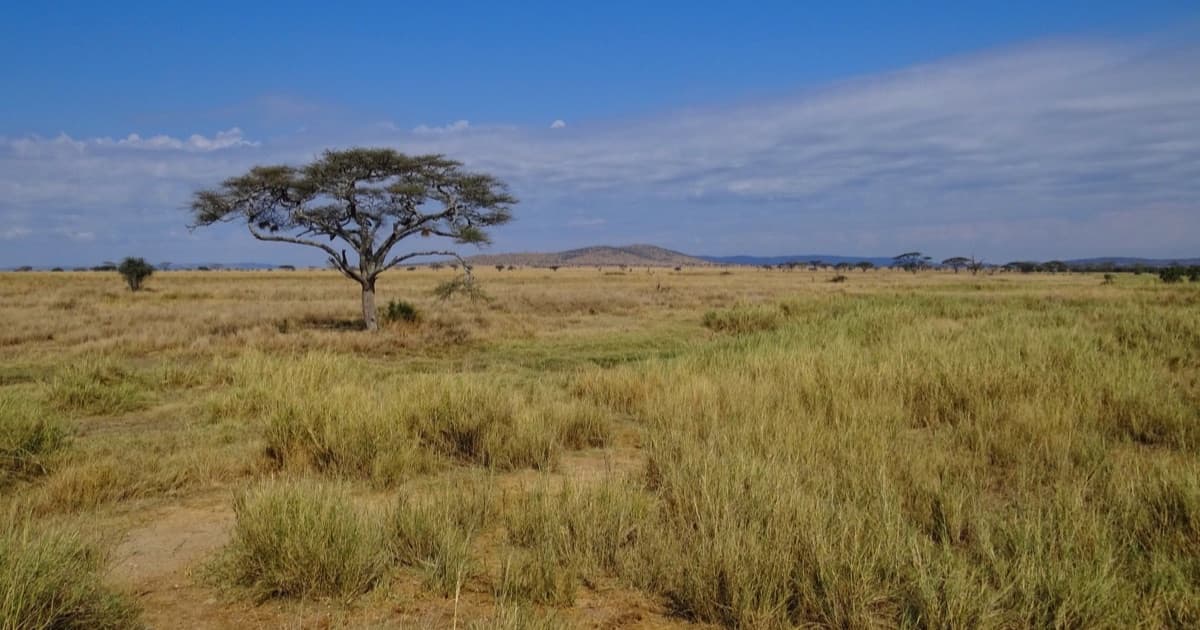
What to expect landing at JRO
Kilimanjaro International Airport sits midway between Arusha and Moshi, roughly 46 km west of Arusha and 50 km east of Moshi. It's Tanzania's third-busiest airport (after Julius Nyerere in Dar es Salaam and Zanzibar), and the only international airport for the northern safari circuit — every Serengeti / Ngorongoro / Tarangire / Kilimanjaro trip starts or ends here.
Most international arrivals land in the late afternoon or evening — KLM from Amsterdam, Qatar from Doha, Ethiopian from Addis, Turkish Airlines from Istanbul, Kenya Airways from Nairobi, and Precision Air / RwandAir from Kigali. Immigration and baggage take 15 to 45 minutes on a normal evening; expect the top of that range when multiple flights arrive together.
The airport has one main terminal, one arrivals hall, and one departures hall. It is small enough that you cannot really get lost — but the arrival sequence has enough details that new visitors miss things and pay for the miss later.
The visa question — VOA vs e-visa
Visa on arrival works at JRO. Cost:
- US$50 for most nationalities (single entry, 90 days)
- US$100 for US citizens (multiple entry, 12 months — you're paying for the multiple-entry class, not being charged extra)
Payment is US dollars cash only. Bills must be recent, clean, and undamaged — Tanzanian immigration reject worn or pre-2013 bills routinely. Bring exact change or slightly over.
Passport requirements: valid for at least 6 months beyond your intended departure date; at least one blank page for the visa stamp.
E-visa alternative
You can apply online at visa.immigration.go.tz at least 2 weeks before travel. Approval takes 1–7 business days. Fees are identical to VOA. Advantages: skip the visa queue on arrival (you go straight to the passport-stamp counter with a printed Visa Grant Notice), and no worry about cash-bill quality. Disadvantages: extra step at home, occasional processing delays.
The practical choice: VOA if you arrive during off-peak hours and can bring clean USD cash. E-visa if you arrive on a busy evening or want peace of mind before you fly.
The new mandatory travel insurance fee — US$44
Introduced in Tanzania's 2025/26 fiscal budget and effective at all ports of entry including JRO, this is a US$44-per-person mandatory travel insurance policy that covers medical emergencies, accidents, and baggage loss for 62 days from the date of purchase. It is:
- Non-refundable once paid
- Non-optional — you cannot decline it and you cannot use your own private travel insurance to substitute
- Paid in USD at the same counter as your visa
Budget for it. A couple pays US$88 on top of visa fees; a family of four pays US$176. It's the single most common budget surprise for 2026 arrivals — every 2024/2025 trip report skipped it because it didn't exist yet.
The arrival sequence — what actually happens
Order at JRO immigration is fixed:
- Fill in the arrival card on the plane (or at the desk before immigration if you didn't get one).
- Pay for VOA + mandatory insurance at the visa counter if you don't already have an e-visa. Have USD cash ready.
- Present passport at the immigration counter for stamp. Officer scans your fingerprints — index fingers of both hands.
- Collect luggage at the baggage carousel. There is one carousel serving all arrivals.
- Customs is usually a walk-through. Random inspections happen; declare US$10,000+ in cash.
- Exit into the arrivals hall. ATMs, SIM counters, forex bureaus, taxi desks, and the meet-and-greet crowd are here.
Porters will offer to carry your luggage from the plane door onward. Tip US$1–2 per bag if you accept; a firm "no thank you" if you don't need help.
ATMs, SIMs, and currency at JRO
ATMs in the arrivals hall are 24/7. CRDB, NBC, and NMB machines accept international Visa and Mastercard. Withdraw Tanzanian Shillings (TZS) — expect a per-transaction fee of TZS 8,000–15,000 (~US$3–6) plus your home bank's foreign-transaction fee.
Rates for exchanging USD to TZS at the JRO forex counter are noticeably worse than in Arusha or Moshi town. For small change (SIM card, snacks, tips) exchange US$20–40 at the airport; for bigger amounts wait until you're in town.
SIM cards — Vodacom, Airtel, and Tigo have counters in the arrivals hall. You need your passport for SIM registration (Tanzanian law). Data packages typically:
- 10 GB / 30 days ≈ TZS 25,000 (~US$10) on Vodacom/Airtel — the standard tourist bundle
- Coverage: Vodacom has the widest safari-area coverage; Airtel is close behind; Tigo is thinner outside cities
Buy at the airport if the counter is open. If it's late and closed, buy at your Arusha or Moshi hotel — every hotel front desk can arrange a SIM within an hour.
USD is widely accepted for tour operators, park fees, tips, and lodge upgrades. TZS is for small purchases, bajaj/taxi rides in town, water, and market shopping. Bring both.
Transfers from JRO — Arusha, Moshi, Karatu
Most safari travellers are picked up by their operator at the arrivals hall exit — a driver holding a sign with your name. If you're arranging your own transfer, four options:
Taxi (US$40–50)
Accredited airport taxis wait outside the arrivals hall. Rate to Arusha is fixed at US$50; Moshi US$40–50. Journey time 1 h – 1 h 10 min in normal traffic. Pay in USD or TZS. Confirm the price before getting in — the taxis are honest but freelance drivers in the car park sometimes try their luck.
Shared shuttle bus (US$4–6)
The cheapest option, around US$4–6 to either Arusha or Moshi. The catch: no fixed schedule. Shuttles wait until they fill, stop frequently to pick up more passengers, and take about 1 h 30 min end-to-end. Useful only if you're on a very tight budget and don't have a firm hotel arrival window.
Pre-booked shuttle (US$55)
Companies like Zanzibar Tours & Airport Transfers and Kilimanjaro Shuttle run on-demand transfers with a driver at the arrivals hall holding your name, dedicated vehicle, 57 min to Arusha. Priced around US$55. The right choice if you want the reliability of a private taxi with a booking receipt to show in advance.
Operator transfer (usually included)
If you've booked a Northern Circuit safari through an operator, airport transfer is almost always included in the package price. Confirm this in writing before you leave home — you should have your driver's name and phone number in your booking confirmation.
Onward to Karatu / Ngorongoro Gate
Some safaris drive straight from JRO to Karatu (near Ngorongoro Gate) — that's a ~4 h drive on tarmac via Arusha and the A104. Only worth doing on arrival if you land before noon; otherwise overnight in Arusha and start the safari fresh.
Domestic flights out of JRO to the Serengeti
JRO's domestic terminal connects to every airstrip in the Serengeti and to Zanzibar. Airlines: Coastal Aviation, Auric Air, Regional Air, Air Excel, Northern Air. Common routes and typical fares:
- JRO ↔ Seronera (Serengeti central): ~1 h, from US$180–250 one-way
- JRO ↔ Kogatende (Serengeti Mara): ~1.5 h, from US$250–380 one-way
- JRO ↔ Grumeti (Serengeti western): ~1.5 h, from US$200–300 one-way
- JRO ↔ Zanzibar (ZNZ): ~1 h 15 min, from US$150–250 one-way
Serengeti fly-in safaris typically skip the road transfer from Arusha and fly direct JRO → Seronera. Fly-in adds cost but removes 6–8 hours of driving on the return leg (Serengeti → Arusha is a full day by road).
See our Kilimanjaro guide for climb-specific arrival planning, Arusha destination page for base-town accommodation, and 7-Day Northern Circuit itinerary for how the domestic connections fit into a full safari.