
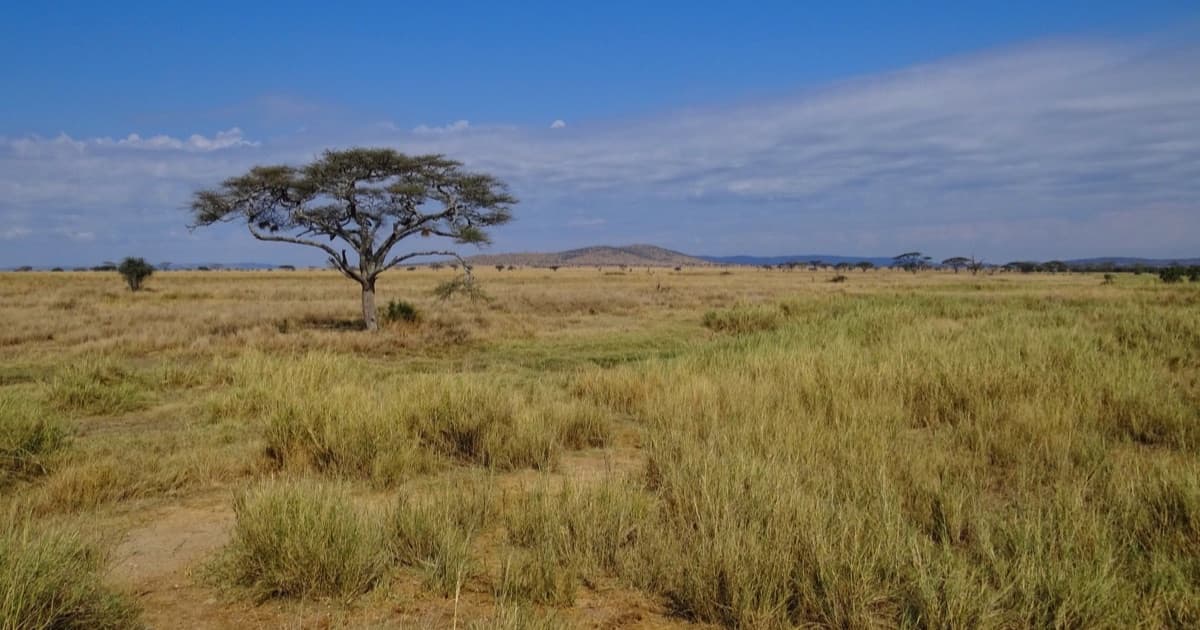
Weather in December
The short rains usually peak in late November and ease by mid-December. Brief afternoon showers are common in the first half of the month; the second half is typically drier. Daytime temperatures sit at 26–29°C (79–84°F).
Mornings are clear most days. Skies are dramatic — green landscapes with stormy afternoon light.
Wildlife in December
The Great Migration moves into the southern Serengeti's Ndutu plains through December. By Christmas, the herds are typically settled in the southern plains, preparing for the calving season that begins in January.
Tarangire elephant numbers continue dispersing as water becomes widely available. Ngorongoro Crater is consistent. Ruaha and Nyerere entering their wet pattern but still productive.
December birding remains excellent — migrants are still in residence.
Best parks for December
- Southern Serengeti / Ndutu — herds gathering for calving
- Central Serengeti — predator action continues
- Ngorongoro Crater — year-round consistent
- Tarangire — birds, dispersed elephants
- Ruaha — still productive, before peak wet season
Crowds and costs
December splits sharply by date:
- 1–19 December: shoulder rates, light crowds. Often near-November pricing with December's dry-season wildlife.
- 20 December – 7 January: peak Christmas/New Year. Lodges charge August-equivalent rates. Most premium properties are fully booked months out.
The first two weeks of December are one of the best-value windows of the year for travellers whose dates aren't tied to school holidays.
What to pack
Light layers, light fleece for evenings, brimmed hat, sunscreen, sunglasses, binoculars, closed shoes. A light rain jacket for short-rain residual showers in the first half of the month.
Booking lead time
For Christmas/New Year week (20 December – 7 January), book 8–12 months ahead. The best properties sell out by mid-year. For early-to-mid December, 3–4 months ahead is sufficient.
See also: Tanzania safari in November · January · full month-by-month comparison.